Biography
Amalia Pica was born in 1978 in Neuquén, Argentina. She moved to Buenos Aires to study at Escuela Nacional de Bellas Artes P. Pueyrredón, completing her undergraduate degree in 2001 while assisting in the workshop of artist Tulio de Sagastizabal. She has completed residencies with the Rijksakademie van Beeldende Kunsten, Amsterdam (2004 and 2005); BijlmAIR, Centrum Beeldende Kunst Zuidoost, Stedelijk Museum, Amsterdam (2007); Headlands Center for the Arts, Sausalito, California (2012); and Iaspis, Stockholm (2013). Central to Pica’s work is the problem of communication, which she explores by setting everyday objects alongside obsolete technologies such as shutter telegraphs, slide projectors, and 16 mm film. Yet while her interest is in language, and in the mechanisms by which communication is attempted, most of her projects are silent. She compensates for this apparent lack by adding texts that elucidate the missing parts. Venn Diagram (under the spotlight) (2011), for example, consists of two overlapping circles of colored light projected from theatrical spotlights. In accompanying captions, the artist explains how the dictators of the 1970s banned Venn diagrams and the set theory they illustrate from Argentina’s schools, viewing them as potentially subversive at a time when citizens were being prosecuted for gathering in public. Reflecting further on the branch of mathematics that analyzes and depicts group dynamics, Pica presented an installation and performance titled A ∩ B ∩ C (read as “A intersection B intersection C”) at the Museo Rufino Tamayo in Mexico City in 2013. It featured performers holding up colorful, acrylic shapes in unexpected combinations, applying the mathematical rules of intersection. Returned to the walls at the performance’s conclusion, the shapes seemed endowed with a new and subversive communicative potential. Pica highlights the significance of listening and interpretation in installations such as Eavesdropping (2011), in which drinking glasses are affixed to the wall in an evocation of the age-old snooping technique, and Switchboard (pavilion) (2013), in which the familiar improvised tin-can-and-string telephone is rendered useless by a mass of tangled cords. The artist’s use of antiquated technologies thus emphasizes the ironic possibilities for miscommunication between artist and spectator. Yet while her work can seem reticent at first, hinging as it does on the impossibility of perfect rapport, it is never without humor. Aware that her ideas can never survive the process of realization entirely intact, Pica revels in their inevitable mutation and creates new systems of discourse that brim with fractured syntax, encrypted semantics, and gleeful semiotics. Pica has had solo exhibitions at Malmö Konsthall, Sweden (2010); University of Michigan Museum of Art, Ann Arbor (2011); Modern Art Oxford; Chisenhale Gallery, London; and Kunst Halle Sankt Gallen, Switzerland (all 2012); and MIT List Visual Arts Center, Cambridge, Massachusetts; Museum of Contemporary Art Chicago; Museo Tamayo Arte Contemporáneo, Mexico City, and Museo Nacional de Bellas Artes, Neuquén, Argentina (all 2013); Van Abbemuseum, The Netherlands (2014); and Kunstverein Freiburg, Germany (2016). She has participated in the group exhibitions Deceitful Moon, Hayward Gallery Project Space, London (2009); the Venice Biennale (2011, 2015); The Ungovernables: New Museum Triennial, New Museum of Contemporary Art, New York (2012); Adventures of the Black Square, Whitechapel Art Gallery, London; Under the Same Sun: Art from Latin America Today, Solomon R. Guggenheim Museum (both 2015); and the Gwangju Biennial, South Korea (2016) among others. Pica received the Paul Hamlyn Foundation Award and participated in the Cisneros Fontanals Art Foundation’s Grants and Commissions Program (both 2011). She lives and works in London.
Track Amalia Pica
Get notifications when works come to auction, and access market analytics
Create Free AccountAlready have an account? Sign In
Professional documentation gives you clarity, portability, and confidence in your collection.
Learn why collectors document their holdings online


Your collection, accessible anywhere
Access your collection from any device with our cloud-based platform. Native mobile apps provide seamless synchronization and offline browsing, ensuring your collection data is always at hand.


Biography
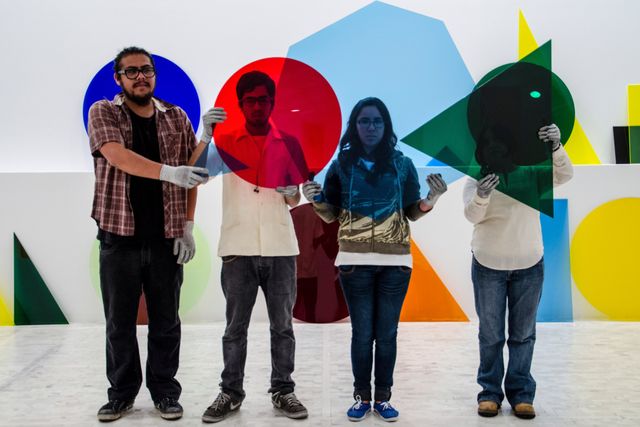
Amalia Pica was born in 1978 in Neuquén, Argentina. She moved to Buenos Aires to study at Escuela Nacional de Bellas Artes P. Pueyrredón, completing her undergraduate degree in 2001 while assisting in the workshop of artist Tulio de Sagastizabal. She has completed residencies with the Rijksakademie van Beeldende Kunsten, Amsterdam (2004 and 2005); BijlmAIR, Centrum Beeldende Kunst Zuidoost, Stedelijk Museum, Amsterdam (2007); Headlands Center for the Arts, Sausalito, California (2012); and Iaspis, Stockholm (2013). Central to Pica’s work is the problem of communication, which she explores by setting everyday objects alongside obsolete technologies such as shutter telegraphs, slide projectors, and 16 mm film. Yet while her interest is in language, and in the mechanisms by which communication is attempted, most of her projects are silent. She compensates for this apparent lack by adding texts that elucidate the missing parts. Venn Diagram (under the spotlight) (2011), for example, consists of two overlapping circles of colored light projected from theatrical spotlights. In accompanying captions, the artist explains how the dictators of the 1970s banned Venn diagrams and the set theory they illustrate from Argentina’s schools, viewing them as potentially subversive at a time when citizens were being prosecuted for gathering in public. Reflecting further on the branch of mathematics that analyzes and depicts group dynamics, Pica presented an installation and performance titled A ∩ B ∩ C (read as “A intersection B intersection C”) at the Museo Rufino Tamayo in Mexico City in 2013. It featured performers holding up colorful, acrylic shapes in unexpected combinations, applying the mathematical rules of intersection. Returned to the walls at the performance’s conclusion, the shapes seemed endowed with a new and subversive communicative potential. Pica highlights the significance of listening and interpretation in installations such as Eavesdropping (2011), in which drinking glasses are affixed to the wall in an evocation of the age-old snooping technique, and Switchboard (pavilion) (2013), in which the familiar improvised tin-can-and-string telephone is rendered useless by a mass of tangled cords. The artist’s use of antiquated technologies thus emphasizes the ironic possibilities for miscommunication between artist and spectator. Yet while her work can seem reticent at first, hinging as it does on the impossibility of perfect rapport, it is never without humor. Aware that her ideas can never survive the process of realization entirely intact, Pica revels in their inevitable mutation and creates new systems of discourse that brim with fractured syntax, encrypted semantics, and gleeful semiotics. Pica has had solo exhibitions at Malmö Konsthall, Sweden (2010); University of Michigan Museum of Art, Ann Arbor (2011); Modern Art Oxford; Chisenhale Gallery, London; and Kunst Halle Sankt Gallen, Switzerland (all 2012); and MIT List Visual Arts Center, Cambridge, Massachusetts; Museum of Contemporary Art Chicago; Museo Tamayo Arte Contemporáneo, Mexico City, and Museo Nacional de Bellas Artes, Neuquén, Argentina (all 2013); Van Abbemuseum, The Netherlands (2014); and Kunstverein Freiburg, Germany (2016). She has participated in the group exhibitions Deceitful Moon, Hayward Gallery Project Space, London (2009); the Venice Biennale (2011, 2015); The Ungovernables: New Museum Triennial, New Museum of Contemporary Art, New York (2012); Adventures of the Black Square, Whitechapel Art Gallery, London; Under the Same Sun: Art from Latin America Today, Solomon R. Guggenheim Museum (both 2015); and the Gwangju Biennial, South Korea (2016) among others. Pica received the Paul Hamlyn Foundation Award and participated in the Cisneros Fontanals Art Foundation’s Grants and Commissions Program (both 2011). She lives and works in London.
Track Amalia Pica
Get notifications when works come to auction, and access market analytics
Create Free AccountAlready have an account? Sign In
Professional documentation gives you clarity, portability, and confidence in your collection.
Learn why collectors document their holdings onlineYour collection, accessible anywhere
Access your collection from any device with our cloud-based platform. Native mobile apps provide seamless synchronization and offline browsing, ensuring your collection data is always at hand.