Biography
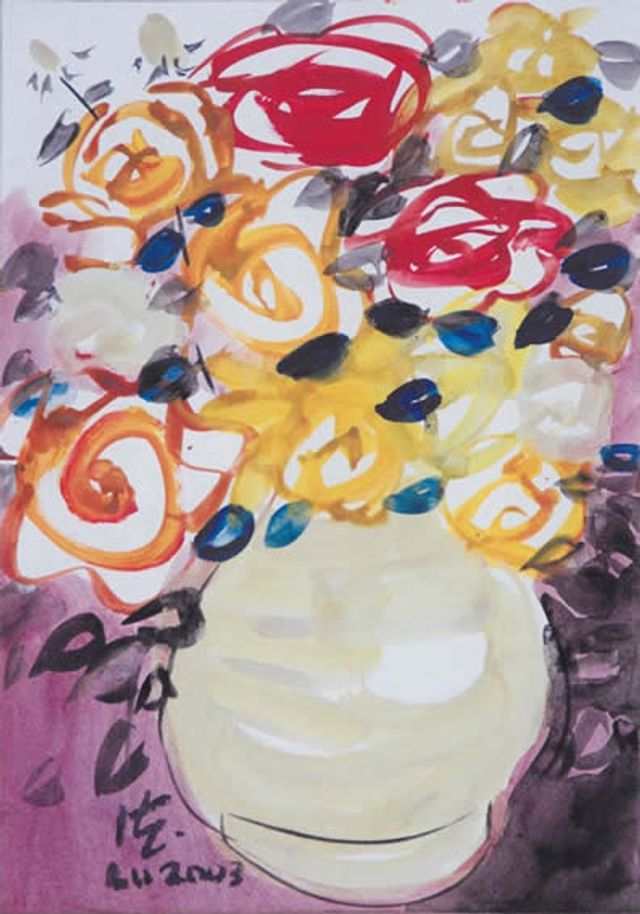
Dr Earl Lu was a renowned Singaporean general surgeon by profession as well as a keen philanthropist, art patron and painter. In serving on several institutional boards to promote the visual arts and art education, heading the Singapore Art Museum as Chairman for eight years and collecting and donating to various museums and galleries many art works by pioneer and emerging Singapore artists, he was one of Singapore and Southeast Asian art’s strongest advocates. Himself a painter, he is known for his paintings of roses. Dr Earl Lu Ming Teh was born in Hong Kong on 15 September 1925. The only son of four children of a banker and homemaker, Earl grew up in Hong Kong, Malaysia (Klang), Shanghai and Singapore where he studied at St Andrew's School from 1938 to 1942, and India (Simla) where his family had escaped to just before Singapore was invaded by the Japanese and where he completed his O levels. India where his family lived for a year was also significant because it impressed on the then 17-year-old the importance of spirituality in life, and gave him an affinity for Hinduism that would last a lifetime. Lu subsequently moved to Australia where he studied medicine at the University of Sydney. There he attained not only his medical degree, but also met Norma who would later become his wife. He returned to Singapore in 1958 to practice as a general surgeon and raise his family. While working as a general surgeon, he also gave his time to volunteer work. During the 60s, he began volunteering at the St Andrews Mission Hospital, and later on through the 70s and 80s, volunteered as a field medic with the Singapore Armed Forces. Lu’s love for medicine was matched by his passion for art. This had developed early on as a child surrounded by traditional Chinese ink paintings and antique ceramics which his father and grandfather loved and collected. Lu too started collecting art while still a student, buying at first prints and photographs that he could afford. It was only when he began working as a surgeon that he became a serious collector, buying Chinese and Southeast Asian Paintings and ceramics and building up a large and invaluable collection. He later donated most of the works to various institutions including the Asian Civilisations Museum, National University of Singapore museums and Singapore Art Museum. He also donated several artworks by Singapore pioneer artists to the LASALLE-SIA College of the Arts, leading to the institution naming its art gallery after him. Additionally, when Lu became the Singapore Art Museum’s founding Chairman in 1992, a role he served until 2000, the museum, under his advice, bought many 20th century Southeast Asian art works and today its collection is considered the largest in the world. Sometime in the ’50s, Lu himself began to paint. Then in his early 30s, he took lessons from pioneering Singapore artist, teacher and furniture-maker Chen Wen Hsi, who was a friend of his father. Under Chen, Lu learnt to paint from life and became a keen student of Chinese ink painting. After years of practice, he became an accomplished landscape and figurative painter, painting landscapes as seen in his imagination and painting female figures often as sensual motherhood figures. Although an art buyer, he did not make money from his art works, choosing instead to give them away or donate them to art institutions and causes. By the early 2000s, Lu had become one of Singapore’s leading surgeons, been appointed a Justice of the Peace in 1990, received the Public Service Star Award from the President in 1995, donated many precious paintings and ceramics in his collection to museums, supported organisations such as the National Arthritis Foundation, organised several charity auctions with proceeds from the sale of his works going to various medical funds, served as President of the Southeast Asian Ceramics Society and the Society of Chinese Artists, and served on the boards and committees of several institutions to promote the visual arts and art education such as the Lee Kong Chian Museum’s Acquisitions Committee and the Istana Art Advisory Committee. When Lu retired in 2003, he threw himself into art-making, enrolling in drawing classes at LASALLE College of the Arts and travelling overseas with fellow artists to paint. On 2 September 2005, during a cruise in the Mediterranean, Lu contracted pneumonia. He was brought to Pisa, Italy and passed away two weeks before his 80th birthday. Today, his rose paintings continue to grace the walls of several hospitals including the National University Hospital, Mount Alvernia Hospital, and the Royal College of Surgeons in Edinburgh, UK, gracious reminders of their creator’s many contributions to the fields of art and medicine in Singapore.
Track Earl Lu
Get notifications when works come to auction, and access market analytics
Create Free AccountAlready have an account? Sign In
Professional documentation gives you clarity, portability, and confidence in your collection.
Learn why collectors document their holdings online


Your collection, accessible anywhere
Access your collection from any device with our cloud-based platform. Native mobile apps provide seamless synchronization and offline browsing, ensuring your collection data is always at hand.


Biography
Dr Earl Lu was a renowned Singaporean general surgeon by profession as well as a keen philanthropist, art patron and painter. In serving on several institutional boards to promote the visual arts and art education, heading the Singapore Art Museum as Chairman for eight years and collecting and donating to various museums and galleries many art works by pioneer and emerging Singapore artists, he was one of Singapore and Southeast Asian art’s strongest advocates. Himself a painter, he is known for his paintings of roses. Dr Earl Lu Ming Teh was born in Hong Kong on 15 September 1925. The only son of four children of a banker and homemaker, Earl grew up in Hong Kong, Malaysia (Klang), Shanghai and Singapore where he studied at St Andrew's School from 1938 to 1942, and India (Simla) where his family had escaped to just before Singapore was invaded by the Japanese and where he completed his O levels. India where his family lived for a year was also significant because it impressed on the then 17-year-old the importance of spirituality in life, and gave him an affinity for Hinduism that would last a lifetime. Lu subsequently moved to Australia where he studied medicine at the University of Sydney. There he attained not only his medical degree, but also met Norma who would later become his wife. He returned to Singapore in 1958 to practice as a general surgeon and raise his family. While working as a general surgeon, he also gave his time to volunteer work. During the 60s, he began volunteering at the St Andrews Mission Hospital, and later on through the 70s and 80s, volunteered as a field medic with the Singapore Armed Forces. Lu’s love for medicine was matched by his passion for art. This had developed early on as a child surrounded by traditional Chinese ink paintings and antique ceramics which his father and grandfather loved and collected. Lu too started collecting art while still a student, buying at first prints and photographs that he could afford. It was only when he began working as a surgeon that he became a serious collector, buying Chinese and Southeast Asian Paintings and ceramics and building up a large and invaluable collection. He later donated most of the works to various institutions including the Asian Civilisations Museum, National University of Singapore museums and Singapore Art Museum. He also donated several artworks by Singapore pioneer artists to the LASALLE-SIA College of the Arts, leading to the institution naming its art gallery after him. Additionally, when Lu became the Singapore Art Museum’s founding Chairman in 1992, a role he served until 2000, the museum, under his advice, bought many 20th century Southeast Asian art works and today its collection is considered the largest in the world. Sometime in the ’50s, Lu himself began to paint. Then in his early 30s, he took lessons from pioneering Singapore artist, teacher and furniture-maker Chen Wen Hsi, who was a friend of his father. Under Chen, Lu learnt to paint from life and became a keen student of Chinese ink painting. After years of practice, he became an accomplished landscape and figurative painter, painting landscapes as seen in his imagination and painting female figures often as sensual motherhood figures. Although an art buyer, he did not make money from his art works, choosing instead to give them away or donate them to art institutions and causes. By the early 2000s, Lu had become one of Singapore’s leading surgeons, been appointed a Justice of the Peace in 1990, received the Public Service Star Award from the President in 1995, donated many precious paintings and ceramics in his collection to museums, supported organisations such as the National Arthritis Foundation, organised several charity auctions with proceeds from the sale of his works going to various medical funds, served as President of the Southeast Asian Ceramics Society and the Society of Chinese Artists, and served on the boards and committees of several institutions to promote the visual arts and art education such as the Lee Kong Chian Museum’s Acquisitions Committee and the Istana Art Advisory Committee. When Lu retired in 2003, he threw himself into art-making, enrolling in drawing classes at LASALLE College of the Arts and travelling overseas with fellow artists to paint. On 2 September 2005, during a cruise in the Mediterranean, Lu contracted pneumonia. He was brought to Pisa, Italy and passed away two weeks before his 80th birthday. Today, his rose paintings continue to grace the walls of several hospitals including the National University Hospital, Mount Alvernia Hospital, and the Royal College of Surgeons in Edinburgh, UK, gracious reminders of their creator’s many contributions to the fields of art and medicine in Singapore.
Track Earl Lu
Get notifications when works come to auction, and access market analytics
Create Free AccountAlready have an account? Sign In
Professional documentation gives you clarity, portability, and confidence in your collection.
Learn why collectors document their holdings onlineYour collection, accessible anywhere
Access your collection from any device with our cloud-based platform. Native mobile apps provide seamless synchronization and offline browsing, ensuring your collection data is always at hand.