Biography
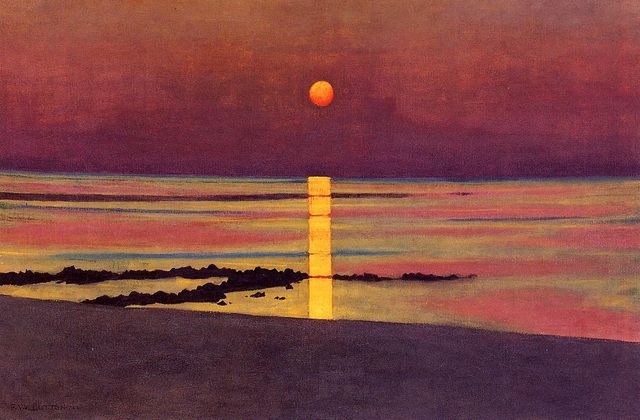
Félix Vallotton was a Swiss-born French painter and printmaker known for his precise use of line and exacting forms. In his depictions of sensuous nudes, stage-like interiors, and landscapes at sunset, Vallotton conjured a sense that something mysterious lay beneath his scenes. “I think I paint for people who are level-headed but who have an unspoken vice deep inside them,” he once remarked. “I actually like this state which I share.” Born Félix Edouard Vallotton on December 28, 1865 in Lausanne, Switzerland, in 1882 he moved to Paris, where he studied under Jules Joseph Lefebvre at the Académie Julian. Initially producing portraits grounded in the academic tradition, Vallotton was inspired by works he observed at the Louvre, by Hans Holbein, Jean-Auguste-Dominique Ingres, and Albrecht Dürer. A decade later in 1892, Vallotton had become a part of the milieu of artists known as Les Nabis, which included Pierre Bonnard, Maurice Denis, and Édouard Vuillard. The ideas espoused by the Nabis coincided with Vallotton’s own interests, as he had already begun producing wood cuts inspired by the flat colors and silhouetted forms of Japanese ukiyo-e prints. From 1910 onward, his works had become increasingly stylized, with tightly outlined forms and naturalistic colors. Vallotton died at age of 60 on December 29, 1925 in Paris, France. Today, his works are held in the collections of the National Gallery of Art in Washington, D.C., the Musée d’Orsay in Paris, the Tate Gallery in London, and the Hermitage Museum in St. Petersburg, among others.
Track Félix Vallotton
Get notifications when works come to auction, and access market analytics
Create Free AccountAlready have an account? Sign In
Professional documentation gives you clarity, portability, and confidence in your collection.
Learn why collectors document their holdings online


Your collection, accessible anywhere
Access your collection from any device with our cloud-based platform. Native mobile apps provide seamless synchronization and offline browsing, ensuring your collection data is always at hand.


Biography
Félix Vallotton was a Swiss-born French painter and printmaker known for his precise use of line and exacting forms. In his depictions of sensuous nudes, stage-like interiors, and landscapes at sunset, Vallotton conjured a sense that something mysterious lay beneath his scenes. “I think I paint for people who are level-headed but who have an unspoken vice deep inside them,” he once remarked. “I actually like this state which I share.” Born Félix Edouard Vallotton on December 28, 1865 in Lausanne, Switzerland, in 1882 he moved to Paris, where he studied under Jules Joseph Lefebvre at the Académie Julian. Initially producing portraits grounded in the academic tradition, Vallotton was inspired by works he observed at the Louvre, by Hans Holbein, Jean-Auguste-Dominique Ingres, and Albrecht Dürer. A decade later in 1892, Vallotton had become a part of the milieu of artists known as Les Nabis, which included Pierre Bonnard, Maurice Denis, and Édouard Vuillard. The ideas espoused by the Nabis coincided with Vallotton’s own interests, as he had already begun producing wood cuts inspired by the flat colors and silhouetted forms of Japanese ukiyo-e prints. From 1910 onward, his works had become increasingly stylized, with tightly outlined forms and naturalistic colors. Vallotton died at age of 60 on December 29, 1925 in Paris, France. Today, his works are held in the collections of the National Gallery of Art in Washington, D.C., the Musée d’Orsay in Paris, the Tate Gallery in London, and the Hermitage Museum in St. Petersburg, among others.
Track Félix Vallotton
Get notifications when works come to auction, and access market analytics
Create Free AccountAlready have an account? Sign In
Professional documentation gives you clarity, portability, and confidence in your collection.
Learn why collectors document their holdings onlineYour collection, accessible anywhere
Access your collection from any device with our cloud-based platform. Native mobile apps provide seamless synchronization and offline browsing, ensuring your collection data is always at hand.