Biography
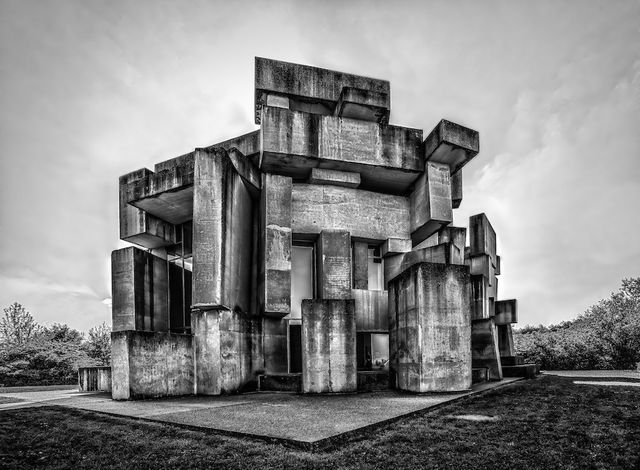
Fritz Wotruba, (born April 23, 1907, Vienna, Austria—died Aug. 25, 1975, Vienna), Austrian sculptor of spare, architectonic images of the human form. Wotruba learned engraving at age 14; in 1925–26 he was the student of sculptor Anton Hanak. Wrought in hard stone with a coarse texture, his early works were representational, but they became more abstract as he struggled to develop a personal style that would eliminate inessentials. Between 1939 and 1945 Wotruba’s technique continued to evolve, and the pieces produced during 1945 became more angular and less related to the human figure, as in his series of “Human Cathedrals” (1946–49). By the 1950’s few of the traditional concepts of form remained in his figures built up like towers from roughly trimmed blocks of stone. The power of these often life-size works derives from their impassive simplicity. From 1952, the surfaces of Wotruba’s sculptures become more refined and have more curves and depressions.
Track Fritz Wotruba
Get notifications when works come to auction, and access market analytics
Create Free AccountAlready have an account? Sign In
Professional documentation gives you clarity, portability, and confidence in your collection.
Learn why collectors document their holdings online


Your collection, accessible anywhere
Access your collection from any device with our cloud-based platform. Native mobile apps provide seamless synchronization and offline browsing, ensuring your collection data is always at hand.


Biography
Fritz Wotruba, (born April 23, 1907, Vienna, Austria—died Aug. 25, 1975, Vienna), Austrian sculptor of spare, architectonic images of the human form. Wotruba learned engraving at age 14; in 1925–26 he was the student of sculptor Anton Hanak. Wrought in hard stone with a coarse texture, his early works were representational, but they became more abstract as he struggled to develop a personal style that would eliminate inessentials. Between 1939 and 1945 Wotruba’s technique continued to evolve, and the pieces produced during 1945 became more angular and less related to the human figure, as in his series of “Human Cathedrals” (1946–49). By the 1950’s few of the traditional concepts of form remained in his figures built up like towers from roughly trimmed blocks of stone. The power of these often life-size works derives from their impassive simplicity. From 1952, the surfaces of Wotruba’s sculptures become more refined and have more curves and depressions.
Track Fritz Wotruba
Get notifications when works come to auction, and access market analytics
Create Free AccountAlready have an account? Sign In
Professional documentation gives you clarity, portability, and confidence in your collection.
Learn why collectors document their holdings onlineYour collection, accessible anywhere
Access your collection from any device with our cloud-based platform. Native mobile apps provide seamless synchronization and offline browsing, ensuring your collection data is always at hand.