Biography
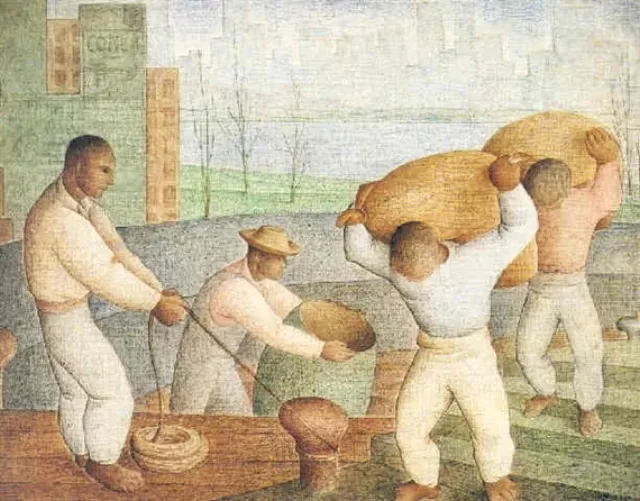
Hector Poleo was born in Caracas, Venezuela in 1918. Poleo studied painting at the academia de Bellas Artes in Caracas, from 1930 to 1938. In 1938 he went to Mexico City on a scholarship to study at La Academia de San Carlos. After returning to Venezuela in 1941 he painted the three commissaries (1942); a work of social realism that won him the John Bolton prize in the fourth national salon of Venezuelan art in 1943. In 1949 he adapted his realism for a surrealist period, and in the following year he was awarded a Guggenheim fellowship to study in Europe. Polio returned to Caracas in 1950 and, while retaining the realism of his portraiture, he began to simplify the backgrounds of his works and introduce abstract elements. These concerns were also evident in his mural for the campus of the Universidad Central de Venezuela in Caracas (1954). In 1958 he settled in Paris. During the 1950s he produced neo-plastic figurative paintings, and in the 1960s and 1970s he turned to a softly worked and evocative neo-symbolism in such pieces as The Arid Sky. Some of these works come close to abstraction, although in the 1980s a schematic realism re-emerged in his paintings. He died in Caracas in 1989.
Track Héctor Poleo
Get notifications when works come to auction, and access market analytics
Create Free AccountAlready have an account? Sign In
Professional documentation gives you clarity, portability, and confidence in your collection.
Learn why collectors document their holdings online


Your collection, accessible anywhere
Access your collection from any device with our cloud-based platform. Native mobile apps provide seamless synchronization and offline browsing, ensuring your collection data is always at hand.


Biography
Hector Poleo was born in Caracas, Venezuela in 1918. Poleo studied painting at the academia de Bellas Artes in Caracas, from 1930 to 1938. In 1938 he went to Mexico City on a scholarship to study at La Academia de San Carlos. After returning to Venezuela in 1941 he painted the three commissaries (1942); a work of social realism that won him the John Bolton prize in the fourth national salon of Venezuelan art in 1943. In 1949 he adapted his realism for a surrealist period, and in the following year he was awarded a Guggenheim fellowship to study in Europe. Polio returned to Caracas in 1950 and, while retaining the realism of his portraiture, he began to simplify the backgrounds of his works and introduce abstract elements. These concerns were also evident in his mural for the campus of the Universidad Central de Venezuela in Caracas (1954). In 1958 he settled in Paris. During the 1950s he produced neo-plastic figurative paintings, and in the 1960s and 1970s he turned to a softly worked and evocative neo-symbolism in such pieces as The Arid Sky. Some of these works come close to abstraction, although in the 1980s a schematic realism re-emerged in his paintings. He died in Caracas in 1989.
Track Héctor Poleo
Get notifications when works come to auction, and access market analytics
Create Free AccountAlready have an account? Sign In
Professional documentation gives you clarity, portability, and confidence in your collection.
Learn why collectors document their holdings onlineYour collection, accessible anywhere
Access your collection from any device with our cloud-based platform. Native mobile apps provide seamless synchronization and offline browsing, ensuring your collection data is always at hand.