Biography
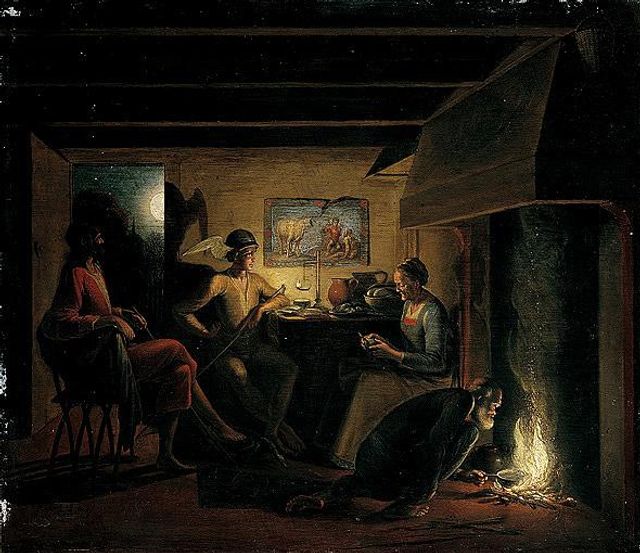
Hendrik Goudt was one of the most influential printmakers in 17th-century Holland. His seven engravings after German painter Adam Elsheimer (1578-1610), with their dramatic chiaroscuro effects and dark tonalities, led the way for dark prints by such other artists as Rembrandt van Rijn (1606-1669) and Jan van de Velde II (ca. 1593-1641). Six of the seven engravings include Latin verses printed in graceful calligraphy. He was the son of Arend Goudt, a member of the lesser nobility in The Hague. Little is known about his early artistic instruction, but scholars have suggested that he received training from Jacques de Gheyn II (1565-1629) and Simon Frisius (ca. 1580-1629), both of whom worked in The Hague; Goudt’s work also shows the influence of Hendrik Goltzius (1558-1617). His skillful calligraphy may have been learned from van de Velde. A few authenticated drawings by Goudt during his early life survive, but no other works of art do. Goudt went to Rome in 1604 and by 1607 is recorded as living in Elsheimer’s house; by 1609 he was living in a house nearby. According to the account written by the German painter and art historian Joachim von Sandrart (1606-1688), Goudt was Elsheimer’s pupil; it is clear that Goudt’s drawing style was based on Elsheimer’s. Sandrart also recorded that Goudt purchased many of Elsheimer’s paintings. Elsheimer suffered financial difficulties and probably was put in debtor’s prison, where he may have contracted his fatal illness. Goudt’s role in this is unclear, but apparently they reconciled after Elsheimer’s release and before his death in 1610. While Italian records list Goudt as a painter, two of his engravings after Elsheimer were made in Rome, dated 1608 and 1610. The remaining five engravings were made in 1612 and 1613, after Goudt returned to Holland to live in Utrecht. He brought with him a number of Elsheimer’s paintings. He was accepted into the artists’ Guild of St. Luke as an engraver and a nobleman. He was apparently a man of means, and acquired valuable real estate in 1612. While drawings by Goudt made after he returned to Holland survive, as well as one painting attributed to him, no other prints by him survive, if any were made. After about 1620 he suffered from mental illness and was declared incompetent in 1625. Sandrart visited Goudt in Utrecht in 1625 and 1626 and found him feeble-minded; other contemporary documents record the same. He died in 1648 in Utrecht.
Track Hendrik Goudt
Get notifications when works come to auction, and access market analytics
Create Free AccountAlready have an account? Sign In
Professional documentation gives you clarity, portability, and confidence in your collection.
Learn why collectors document their holdings online


Your collection, accessible anywhere
Access your collection from any device with our cloud-based platform. Native mobile apps provide seamless synchronization and offline browsing, ensuring your collection data is always at hand.


Biography
Hendrik Goudt was one of the most influential printmakers in 17th-century Holland. His seven engravings after German painter Adam Elsheimer (1578-1610), with their dramatic chiaroscuro effects and dark tonalities, led the way for dark prints by such other artists as Rembrandt van Rijn (1606-1669) and Jan van de Velde II (ca. 1593-1641). Six of the seven engravings include Latin verses printed in graceful calligraphy. He was the son of Arend Goudt, a member of the lesser nobility in The Hague. Little is known about his early artistic instruction, but scholars have suggested that he received training from Jacques de Gheyn II (1565-1629) and Simon Frisius (ca. 1580-1629), both of whom worked in The Hague; Goudt’s work also shows the influence of Hendrik Goltzius (1558-1617). His skillful calligraphy may have been learned from van de Velde. A few authenticated drawings by Goudt during his early life survive, but no other works of art do. Goudt went to Rome in 1604 and by 1607 is recorded as living in Elsheimer’s house; by 1609 he was living in a house nearby. According to the account written by the German painter and art historian Joachim von Sandrart (1606-1688), Goudt was Elsheimer’s pupil; it is clear that Goudt’s drawing style was based on Elsheimer’s. Sandrart also recorded that Goudt purchased many of Elsheimer’s paintings. Elsheimer suffered financial difficulties and probably was put in debtor’s prison, where he may have contracted his fatal illness. Goudt’s role in this is unclear, but apparently they reconciled after Elsheimer’s release and before his death in 1610. While Italian records list Goudt as a painter, two of his engravings after Elsheimer were made in Rome, dated 1608 and 1610. The remaining five engravings were made in 1612 and 1613, after Goudt returned to Holland to live in Utrecht. He brought with him a number of Elsheimer’s paintings. He was accepted into the artists’ Guild of St. Luke as an engraver and a nobleman. He was apparently a man of means, and acquired valuable real estate in 1612. While drawings by Goudt made after he returned to Holland survive, as well as one painting attributed to him, no other prints by him survive, if any were made. After about 1620 he suffered from mental illness and was declared incompetent in 1625. Sandrart visited Goudt in Utrecht in 1625 and 1626 and found him feeble-minded; other contemporary documents record the same. He died in 1648 in Utrecht.
Track Hendrik Goudt
Get notifications when works come to auction, and access market analytics
Create Free AccountAlready have an account? Sign In
Professional documentation gives you clarity, portability, and confidence in your collection.
Learn why collectors document their holdings onlineYour collection, accessible anywhere
Access your collection from any device with our cloud-based platform. Native mobile apps provide seamless synchronization and offline browsing, ensuring your collection data is always at hand.