Biography
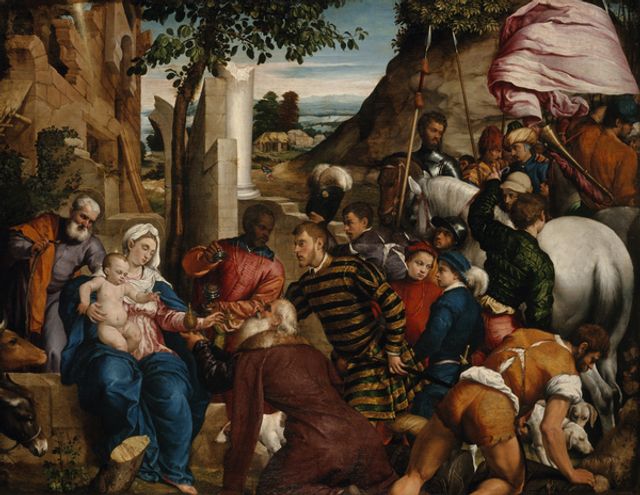
Even though he worked in a small town, Jacopo Bassano was one of the Veneto's most influential painters in the mid-1500s. A pioneer in genre scenes and landscape painting, Jacopo initially trained with his father in the town of Bassano. By 1534 he had found his direction in the art of nearby Venice, learning as much from the chiaroscuro and luxurious color of Titian's works as from his teachers. He always stayed abreast of developments in Venetian painting, sometimes borrowing details from Lorenzo Lotto's works in his portraits. Engravings were critical in forming Jacopo's style, particularly those by and after artists like Albrecht Dürer, Raphael, and Parmigianino. Local taste required that art illustrate reality, and Jacopo drew inspiration from the simple human scenes, farm life, and changing aspects of nature he observed in his hometown. To Mannerism's energy, extreme movement, and tightly compressed space, he added realism and earthiness. A humble and subtle observer, his sitters may seem unaware of his presence. Increasingly, he used religious and philosophical subjects as pretexts for painting genre scenes and landscapes. Jacopo's workshop was a minor industry in Bassano, and his four sons continued his style into the next century.
Track Jacopo Bassano
Get notifications when works come to auction, and access market analytics
Create Free AccountAlready have an account? Sign In
Professional documentation gives you clarity, portability, and confidence in your collection.
Learn why collectors document their holdings online


Your collection, accessible anywhere
Access your collection from any device with our cloud-based platform. Native mobile apps provide seamless synchronization and offline browsing, ensuring your collection data is always at hand.


Biography
Even though he worked in a small town, Jacopo Bassano was one of the Veneto's most influential painters in the mid-1500s. A pioneer in genre scenes and landscape painting, Jacopo initially trained with his father in the town of Bassano. By 1534 he had found his direction in the art of nearby Venice, learning as much from the chiaroscuro and luxurious color of Titian's works as from his teachers. He always stayed abreast of developments in Venetian painting, sometimes borrowing details from Lorenzo Lotto's works in his portraits. Engravings were critical in forming Jacopo's style, particularly those by and after artists like Albrecht Dürer, Raphael, and Parmigianino. Local taste required that art illustrate reality, and Jacopo drew inspiration from the simple human scenes, farm life, and changing aspects of nature he observed in his hometown. To Mannerism's energy, extreme movement, and tightly compressed space, he added realism and earthiness. A humble and subtle observer, his sitters may seem unaware of his presence. Increasingly, he used religious and philosophical subjects as pretexts for painting genre scenes and landscapes. Jacopo's workshop was a minor industry in Bassano, and his four sons continued his style into the next century.
Track Jacopo Bassano
Get notifications when works come to auction, and access market analytics
Create Free AccountAlready have an account? Sign In
Professional documentation gives you clarity, portability, and confidence in your collection.
Learn why collectors document their holdings onlineYour collection, accessible anywhere
Access your collection from any device with our cloud-based platform. Native mobile apps provide seamless synchronization and offline browsing, ensuring your collection data is always at hand.