James Twitty
Biography
James Twitty was a well known contemporary American artist during the late 60’s through the early 90’s. His paintings have been widely displayed both nationally and internationally in such prestigious galleries and museums as: The National Gallery of Art and the Corcoran Gallery in Washington DC (now in their permanent collections), the David Findley Gallery in New York, The Nixon White House, The Grosvenor Gallery in London, Galerie Bettina in Zurich, Queen Square Gallery in Leeds, as well as the private collections of master sculptor John Safer, his friend and colleague Richard Diebenkorn, numerous US Embassies around the world, the movie “The Exorcist”, plus many others. Most of the above paintings that were on loan such as The Nixon White House paintings and The Exorcist are presently in our inventory, are available for sale and can be seen on his website. Prior to beginning his career as an artist James Twitty served for thirty years in The U.S.A.F., retiring in 1958 as a full colonel and the Base Commander of Homestead Air Force Base in Florida. After retiring he studied painting and drawing at the University of Miami Florida and the Art Students League of New York City. He was Associate Professor of Painting at the Concoran School of Art in Washington D.C. and Studio Lecturer in the Fine Arts at The George Washington University. He was also Exchange Professor to the Leeds College of Fine Arts in England, and Guest Artist at the Art Centers in San Antonio, Texas and Miami Florida. He was a Life Member of the Art Students League of New York City, a member of the Houston Society of Painters and Sculptors and Artist Fellow of the Aspen Institute for Humanistic Studies and was listed in numerous references including "Who's Who in American Art" and "Who's Who in America." James Twitty was the first contemporary artist to successfully combine geometric shapes with enigmatic landscapes on a flat background. His work, primarily acrylic and oils on canvas or linen, best describe as vintage postmodern abstract, are in the permanent collections of National Gallery of Art and the Corcoran Gallery of Art, both in Washington D.C.; the Brooklyn Museum; the Baltimore Museum of Art; the Dallas Museum of Fine Arts; the Milkwaukee Arts Center; the Minnesota Museum of Art; the High Museum in Atlanta; the Houston Museum of Fine Arts; the San Francisco Museum of Art and others. He has had over 40 one-man exhibitions including ten in New York City and others in Chicago, Dallas, Houston, Palm Beach, Sarasota, Naples, Scottsdale and elsewhere in the United States and Canada, and overseas in Portugal, Belgium, Scotland, England and Switzerland. "James Twitty is neither a realist nor a non-objectivist; rather he has created his own idiom which belongs to our time, but is not directly linked to any of the current styles. He might be termed an evocativist because his pictures are primarily challenges to our imagination and their meaning will vary according to the experience, perception, fantasy, memory and education of those who experience them. Thus some will see in his distant views maelstroms of tempestuous seas, others idyllic landscapes of flowering meadows, lava flows of threatening rocks, apocalyptic storm clouds, or moonlit visions of placid seaways, gateways to infernos, or visions of peace and rest. His paintings are as much investigation into the subconscious yearnings and fears of the viewer as they are of evidence of his talent as a painter. The enigmatic landscapes are made even more effective by the geometric shapes which serve as catalysts to the scenes behind. The straight lines contrast dramatically with the untamed elements, and the semblance of perspective seems to give some assurance of safety as we look out over his never-never lands. They seem like windows of a spaceship through which we look at an unexplored wildly beautiful planet.Yet another element which contrasts with both the untamed landscapes the geometric forms is the color harmony James Twitty has perfect pitch for color . His color harmonies are never saccharine nor harsh but unite his strange and challenging worlds as supplement to his exquisite and evocative combination of the known and unknown."
Track James Twitty
Get notifications when works come to auction, and access market analytics
Create Free AccountAlready have an account? Sign In
Professional documentation gives you clarity, portability, and confidence in your collection.
Learn why collectors document their holdings online


Your collection, accessible anywhere
Access your collection from any device with our cloud-based platform. Native mobile apps provide seamless synchronization and offline browsing, ensuring your collection data is always at hand.


James Twitty
Biography
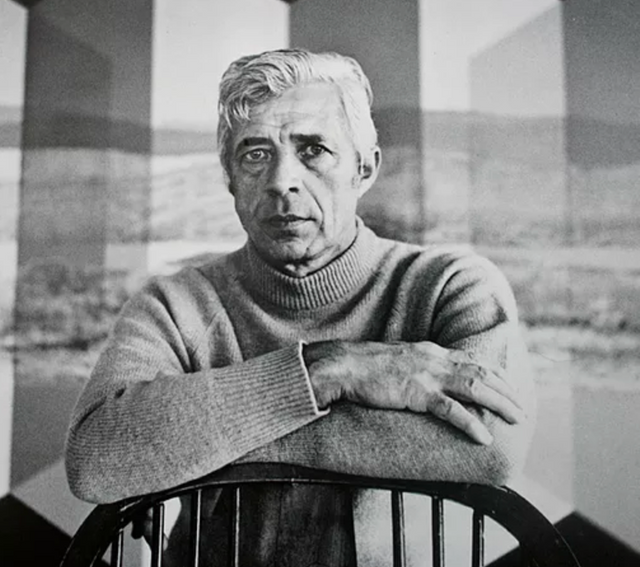
James Twitty was a well known contemporary American artist during the late 60’s through the early 90’s. His paintings have been widely displayed both nationally and internationally in such prestigious galleries and museums as: The National Gallery of Art and the Corcoran Gallery in Washington DC (now in their permanent collections), the David Findley Gallery in New York, The Nixon White House, The Grosvenor Gallery in London, Galerie Bettina in Zurich, Queen Square Gallery in Leeds, as well as the private collections of master sculptor John Safer, his friend and colleague Richard Diebenkorn, numerous US Embassies around the world, the movie “The Exorcist”, plus many others. Most of the above paintings that were on loan such as The Nixon White House paintings and The Exorcist are presently in our inventory, are available for sale and can be seen on his website. Prior to beginning his career as an artist James Twitty served for thirty years in The U.S.A.F., retiring in 1958 as a full colonel and the Base Commander of Homestead Air Force Base in Florida. After retiring he studied painting and drawing at the University of Miami Florida and the Art Students League of New York City. He was Associate Professor of Painting at the Concoran School of Art in Washington D.C. and Studio Lecturer in the Fine Arts at The George Washington University. He was also Exchange Professor to the Leeds College of Fine Arts in England, and Guest Artist at the Art Centers in San Antonio, Texas and Miami Florida. He was a Life Member of the Art Students League of New York City, a member of the Houston Society of Painters and Sculptors and Artist Fellow of the Aspen Institute for Humanistic Studies and was listed in numerous references including "Who's Who in American Art" and "Who's Who in America." James Twitty was the first contemporary artist to successfully combine geometric shapes with enigmatic landscapes on a flat background. His work, primarily acrylic and oils on canvas or linen, best describe as vintage postmodern abstract, are in the permanent collections of National Gallery of Art and the Corcoran Gallery of Art, both in Washington D.C.; the Brooklyn Museum; the Baltimore Museum of Art; the Dallas Museum of Fine Arts; the Milkwaukee Arts Center; the Minnesota Museum of Art; the High Museum in Atlanta; the Houston Museum of Fine Arts; the San Francisco Museum of Art and others. He has had over 40 one-man exhibitions including ten in New York City and others in Chicago, Dallas, Houston, Palm Beach, Sarasota, Naples, Scottsdale and elsewhere in the United States and Canada, and overseas in Portugal, Belgium, Scotland, England and Switzerland. "James Twitty is neither a realist nor a non-objectivist; rather he has created his own idiom which belongs to our time, but is not directly linked to any of the current styles. He might be termed an evocativist because his pictures are primarily challenges to our imagination and their meaning will vary according to the experience, perception, fantasy, memory and education of those who experience them. Thus some will see in his distant views maelstroms of tempestuous seas, others idyllic landscapes of flowering meadows, lava flows of threatening rocks, apocalyptic storm clouds, or moonlit visions of placid seaways, gateways to infernos, or visions of peace and rest. His paintings are as much investigation into the subconscious yearnings and fears of the viewer as they are of evidence of his talent as a painter. The enigmatic landscapes are made even more effective by the geometric shapes which serve as catalysts to the scenes behind. The straight lines contrast dramatically with the untamed elements, and the semblance of perspective seems to give some assurance of safety as we look out over his never-never lands. They seem like windows of a spaceship through which we look at an unexplored wildly beautiful planet.Yet another element which contrasts with both the untamed landscapes the geometric forms is the color harmony James Twitty has perfect pitch for color . His color harmonies are never saccharine nor harsh but unite his strange and challenging worlds as supplement to his exquisite and evocative combination of the known and unknown."
Track James Twitty
Get notifications when works come to auction, and access market analytics
Create Free AccountAlready have an account? Sign In
Professional documentation gives you clarity, portability, and confidence in your collection.
Learn why collectors document their holdings onlineYour collection, accessible anywhere
Access your collection from any device with our cloud-based platform. Native mobile apps provide seamless synchronization and offline browsing, ensuring your collection data is always at hand.