Leo Pors
Biography
Leo Pors was born in 1952 and was primarily inspired by the 1970s. The 1970s were a period of consolidation and growth in the arts, most often characterised as a response to the dominant strains of the previous decade. Conceptual art emerged as a influential movement, a partial evolution of and response to minimalism. Land Art took the works of art into the extensive outdoors, taking creative production away from commodities and looking to engage with the earliest ideas of environmentalism. Process art combined elements of conceptualism with other formal considerations, creating mysterious and experimental bodies of work. Expressive figurative painting began to regain prominence for the first time since the decline of Abstract Expressionism twenty years prior, especially in Germany where Gerhard Richter, Anselm Kiefer, Georg Baselitz became highly powerful figures worldwide. New York maintained an prominent position in the international art world, ensuring that global artists continued to flock to the galleries, bars and downtown scene there. A number of the artists who gained fame and successful in the 1960s remained leading figures. For example, Andy Warhol branched out into film and magazine publishing, the first type of pan cultural activity for a visual artist. This secured his reputation as a globally renowned celebrity in his own right. Towards the end of the decade, the emerging practices of graffiti and street art were beginning to gain attention in the fine art community. Artists like Keith Haring and Jean-Michel Basquiat were working in downtown Manhattan and ensuring that spray paint and tagging gained some acceptability as a fine art practice, a trend which would fully emerge and dominate throughout the following decade. International movements gained prominence included feminism, which translated strongly into the visual culture, and photorealism which had begun in the 1960s and enjoyed momentous commercial and critical success. For the first time painters and sculptors from Latin America were embraced by the dominant critical and institutional levers in New York. In Japan and Korea, artists associated with the Mono-Ha movement focused on encounters between natural and industrial materials such as stone, glass, cotton, sponge, wood, oil and water, arranging them in mostly unchanged, transient states. The works focused on the interplay between these various elements and the surrounding space, and had a strong focus upon the European philosophy of phenomenology. The largely Italian Arte Povera Movement gained world-wide recognition during the 1970s, with artists like Jannis Kounnelis, Mario Merz, and Michelangelo Pistoletto attaining global acclaim.
Track Leo Pors
Get notifications when works come to auction, and access market analytics
Create Free AccountAlready have an account? Sign In
Professional documentation gives you clarity, portability, and confidence in your collection.
Learn why collectors document their holdings online


Your collection, accessible anywhere
Access your collection from any device with our cloud-based platform. Native mobile apps provide seamless synchronization and offline browsing, ensuring your collection data is always at hand.


Leo Pors
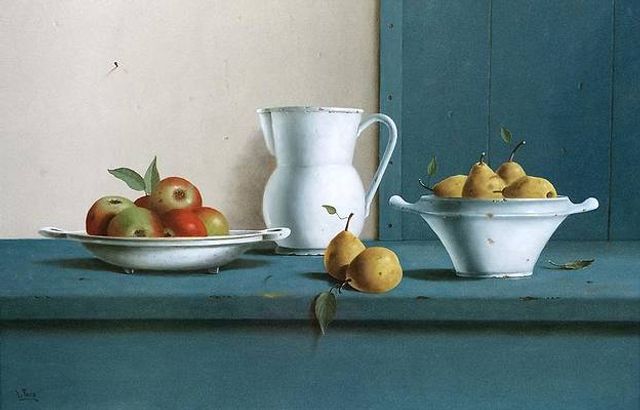
Biography
Leo Pors was born in 1952 and was primarily inspired by the 1970s. The 1970s were a period of consolidation and growth in the arts, most often characterised as a response to the dominant strains of the previous decade. Conceptual art emerged as a influential movement, a partial evolution of and response to minimalism. Land Art took the works of art into the extensive outdoors, taking creative production away from commodities and looking to engage with the earliest ideas of environmentalism. Process art combined elements of conceptualism with other formal considerations, creating mysterious and experimental bodies of work. Expressive figurative painting began to regain prominence for the first time since the decline of Abstract Expressionism twenty years prior, especially in Germany where Gerhard Richter, Anselm Kiefer, Georg Baselitz became highly powerful figures worldwide. New York maintained an prominent position in the international art world, ensuring that global artists continued to flock to the galleries, bars and downtown scene there. A number of the artists who gained fame and successful in the 1960s remained leading figures. For example, Andy Warhol branched out into film and magazine publishing, the first type of pan cultural activity for a visual artist. This secured his reputation as a globally renowned celebrity in his own right. Towards the end of the decade, the emerging practices of graffiti and street art were beginning to gain attention in the fine art community. Artists like Keith Haring and Jean-Michel Basquiat were working in downtown Manhattan and ensuring that spray paint and tagging gained some acceptability as a fine art practice, a trend which would fully emerge and dominate throughout the following decade. International movements gained prominence included feminism, which translated strongly into the visual culture, and photorealism which had begun in the 1960s and enjoyed momentous commercial and critical success. For the first time painters and sculptors from Latin America were embraced by the dominant critical and institutional levers in New York. In Japan and Korea, artists associated with the Mono-Ha movement focused on encounters between natural and industrial materials such as stone, glass, cotton, sponge, wood, oil and water, arranging them in mostly unchanged, transient states. The works focused on the interplay between these various elements and the surrounding space, and had a strong focus upon the European philosophy of phenomenology. The largely Italian Arte Povera Movement gained world-wide recognition during the 1970s, with artists like Jannis Kounnelis, Mario Merz, and Michelangelo Pistoletto attaining global acclaim.
Track Leo Pors
Get notifications when works come to auction, and access market analytics
Create Free AccountAlready have an account? Sign In
Professional documentation gives you clarity, portability, and confidence in your collection.
Learn why collectors document their holdings onlineYour collection, accessible anywhere
Access your collection from any device with our cloud-based platform. Native mobile apps provide seamless synchronization and offline browsing, ensuring your collection data is always at hand.