Biography
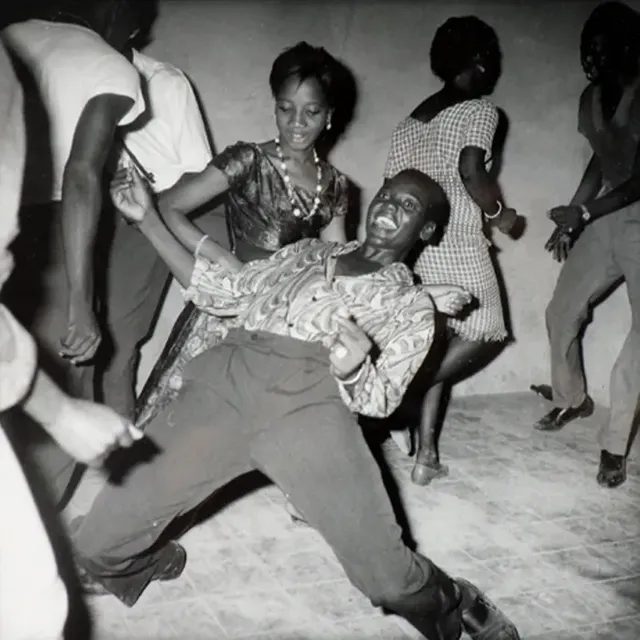
Malick Sidibé was born in Soloba, a small town in southwestern Mali, in 1936. During his youth, Sidibé’s talent for illustration was recognized by the French colonial administration. As a result, at age sixteen, Sidibé was enrolled in the École des artisans Soudanais (now Institut national des arts) in Bamako, Mali’s capital. There, around 1954, Sidibé had his first portrait taken by first-generation Malian photographer Baru Koné, who taught him about photographic composition. In 1955, Sidibé graduated from the college with a degree in jewelry making and was hired by Frenchman Gérard Guillat-Guignard to paint the interior of his studio and photo supply store Photo Service, where he later served as cashier and photography assistant. Observing Guillat-Guignard and his Malian assistant Mamadou Berthé in the darkroom, Sidibé gradually taught himself to develop and print negatives. In 1956, he assumed responsibility for all of the establishment’s reportage or “party” photographs for West African clientele and bought his first camera, a Brownie Flash. Shortly thereafter, Sidibé received reportage commissions directly and by 1957 had become a professional photographer in his own right. That same year, Sidibé started repairing cameras, a trade for which he became well-known throughout Mali and neighboring countries. In 1963, five years after Guillat-Guignard moved to New Caledonia, Sidibé left Photo Service. The year prior, he had opened his own business, Studio Malick, in the neighborhood of Bagadadji—taking most of Photo Service’s African clientele with him. Sidibé’s commissions included studio portraits; photos of weddings, baptisms, surprise parties, and picnics; and pictures of railroad, highway, and architectural construction. Sidibé also traveled to people’s workplaces and homes to make portraits. To advertise his business, he installed a large neon sign and stamped his photographs with the name of his studio, Studio Malick, which bustled with business during its heyday in the 1960s and ’70s. Alongside private commissions, in 1962 Sidibé began to photograph national, cultural, political, and artistic events, such as the annual Semaine nationale de la jeunnesse or Youth Week. He also took pictures of nearly all of Mali’s famous musicians since the 1970s, including Nahawa Doumbia, Boubacar Traoré (commonly known as “Kar Kar”), Salif Salif Keïta, Oumou Sangaré, and Ali Farka Touré. From 1998 to 2009, Sidibé was commissioned to take fashion photographs for magazines such as Vogue, Elle, Cosmopolitan, and the New York Times Magazine. His joyful and energetic style of photography, which mixes urban symbolism with bold patterns and theatrical compositions, has also inspired numerous fashion designers, photographers, videographers, and filmmakers around the globe. In the twenty-first century, Sidibé continued to experiment with photographic genres with works intended for international audiences, such as his Vues de dos (Back Views) series (ca. 2000–09), and developed innovative thematic ideas for future exhibitions. Sidibé’s photographs have been exhibited in numerous group exhibitions, including the first Rencontres de la Photographie Africaine, Bamako (1994); In/Sight: African Photographers, 1940 to the Present, Guggenheim Museum (1996); Flash Afrique!, Kunsthalle Wien, Vienna (2001); You Look Beautiful Like That: The Portrait Photographs of Seydou Keïta and Malick Sidibé, Harvard University Art Museums, Cambridge, Massachusetts (2001; traveled to Hammer Museum of Art, University of California, Los Angeles [2002]; Norton Museum of Art, West Palm Beach, Florida [2002–03]; and High Museum of Art, Atlanta [2003]); The Short Century: Independence and Liberation Movements in Africa, 1945–1994, Museum Villa Stuck, Munich (2002; traveled to the Martin-Gropius-Bau, Berlin [2001]; Museum of Contemporary Art, Chicago [2001]; and MoMA PS1, New York [2002]); and the Venice Biennale (2008). Since 1995, he has served as the president of the Groupement national des photographes professionnels du Mali. In 2003, he became the first African photographer to receive the Hasselblad Foundation International Award in Photography. He was also awarded the Golden Lion for Lifetime Achievement, Venice Biennale (2007); Infinity Award for Lifetime Achievement, International Center of Photography, New York (2008); and Baume and Mercier Award, Photo España (2009). Sidibé died in Bamako on April 14, 2016. He was laid to rest near his mother in his hometown of Soloba.
Track Malick Sidibé
Get notifications when works come to auction, and access market analytics
Create Free AccountAlready have an account? Sign In
Professional documentation gives you clarity, portability, and confidence in your collection.
Learn why collectors document their holdings online


Your collection, accessible anywhere
Access your collection from any device with our cloud-based platform. Native mobile apps provide seamless synchronization and offline browsing, ensuring your collection data is always at hand.


Biography
Malick Sidibé was born in Soloba, a small town in southwestern Mali, in 1936. During his youth, Sidibé’s talent for illustration was recognized by the French colonial administration. As a result, at age sixteen, Sidibé was enrolled in the École des artisans Soudanais (now Institut national des arts) in Bamako, Mali’s capital. There, around 1954, Sidibé had his first portrait taken by first-generation Malian photographer Baru Koné, who taught him about photographic composition. In 1955, Sidibé graduated from the college with a degree in jewelry making and was hired by Frenchman Gérard Guillat-Guignard to paint the interior of his studio and photo supply store Photo Service, where he later served as cashier and photography assistant. Observing Guillat-Guignard and his Malian assistant Mamadou Berthé in the darkroom, Sidibé gradually taught himself to develop and print negatives. In 1956, he assumed responsibility for all of the establishment’s reportage or “party” photographs for West African clientele and bought his first camera, a Brownie Flash. Shortly thereafter, Sidibé received reportage commissions directly and by 1957 had become a professional photographer in his own right. That same year, Sidibé started repairing cameras, a trade for which he became well-known throughout Mali and neighboring countries. In 1963, five years after Guillat-Guignard moved to New Caledonia, Sidibé left Photo Service. The year prior, he had opened his own business, Studio Malick, in the neighborhood of Bagadadji—taking most of Photo Service’s African clientele with him. Sidibé’s commissions included studio portraits; photos of weddings, baptisms, surprise parties, and picnics; and pictures of railroad, highway, and architectural construction. Sidibé also traveled to people’s workplaces and homes to make portraits. To advertise his business, he installed a large neon sign and stamped his photographs with the name of his studio, Studio Malick, which bustled with business during its heyday in the 1960s and ’70s. Alongside private commissions, in 1962 Sidibé began to photograph national, cultural, political, and artistic events, such as the annual Semaine nationale de la jeunnesse or Youth Week. He also took pictures of nearly all of Mali’s famous musicians since the 1970s, including Nahawa Doumbia, Boubacar Traoré (commonly known as “Kar Kar”), Salif Salif Keïta, Oumou Sangaré, and Ali Farka Touré. From 1998 to 2009, Sidibé was commissioned to take fashion photographs for magazines such as Vogue, Elle, Cosmopolitan, and the New York Times Magazine. His joyful and energetic style of photography, which mixes urban symbolism with bold patterns and theatrical compositions, has also inspired numerous fashion designers, photographers, videographers, and filmmakers around the globe. In the twenty-first century, Sidibé continued to experiment with photographic genres with works intended for international audiences, such as his Vues de dos (Back Views) series (ca. 2000–09), and developed innovative thematic ideas for future exhibitions. Sidibé’s photographs have been exhibited in numerous group exhibitions, including the first Rencontres de la Photographie Africaine, Bamako (1994); In/Sight: African Photographers, 1940 to the Present, Guggenheim Museum (1996); Flash Afrique!, Kunsthalle Wien, Vienna (2001); You Look Beautiful Like That: The Portrait Photographs of Seydou Keïta and Malick Sidibé, Harvard University Art Museums, Cambridge, Massachusetts (2001; traveled to Hammer Museum of Art, University of California, Los Angeles [2002]; Norton Museum of Art, West Palm Beach, Florida [2002–03]; and High Museum of Art, Atlanta [2003]); The Short Century: Independence and Liberation Movements in Africa, 1945–1994, Museum Villa Stuck, Munich (2002; traveled to the Martin-Gropius-Bau, Berlin [2001]; Museum of Contemporary Art, Chicago [2001]; and MoMA PS1, New York [2002]); and the Venice Biennale (2008). Since 1995, he has served as the president of the Groupement national des photographes professionnels du Mali. In 2003, he became the first African photographer to receive the Hasselblad Foundation International Award in Photography. He was also awarded the Golden Lion for Lifetime Achievement, Venice Biennale (2007); Infinity Award for Lifetime Achievement, International Center of Photography, New York (2008); and Baume and Mercier Award, Photo España (2009). Sidibé died in Bamako on April 14, 2016. He was laid to rest near his mother in his hometown of Soloba.
Track Malick Sidibé
Get notifications when works come to auction, and access market analytics
Create Free AccountAlready have an account? Sign In
Professional documentation gives you clarity, portability, and confidence in your collection.
Learn why collectors document their holdings onlineYour collection, accessible anywhere
Access your collection from any device with our cloud-based platform. Native mobile apps provide seamless synchronization and offline browsing, ensuring your collection data is always at hand.