Biography
Mark Leckey was born in 1964 in Birkenhead, in the United Kingdom. Growing up in Ellesmere Port, on the outskirts of Liverpool, Leckey was keenly aware of his outsider status. He found acceptance as part of the “casual” subculture, which emerged from football hooliganism in the late-1970s United Kingdom, and demonstrated an early interest in the intersections between material culture, fashion, transformation, and identity. He received his BA from Newcastle Polytechnic in 1990. Leckey produces art that addresses the abundance of objects and images in contemporary culture. In his films, sculptures, and installations, the artist has at various times assumed the role of alchemist by transforming objects and images into new mediums. The found footage that Leckey spliced together in his 1999 film Fiorucci Made Me Hardcore, a portrayal of British dance culture, begins and ends with sequences of ethereal cloudscapes and includes a succession of scenes of dancing people, walking youths, and feet clad in Adidas Samba sneakers. Set to a soundtrack of trancelike music, racing cars, and sirens, these scenes both commemorate and reanimate the distinct 1980s British subculture of the casuals. In the film Leckey also references the casuals’ penchant for brand names by using a voiceover listing the names of high-end clothing designers such as the Italian brand Fiorucci. Leckey’s translational processes include 3-D scanning and printing, green screen technology, and CGI. The artist’s 2004 film Made in ’Eaven features a CGI simulation of Jeff Koons’s seminal 1986 sculpture Rabbit in the center of Leckey’s apartment. Indicating the artist’s desire to engage with objects on multiple levels, the simulation of Koons’s work exactly resembles the original; however, the absence of a camera’s reflection on the surface of the stainless steel sculpture indicates the simulation’s digital origins. Like many of Leckey’s other works, Made in ’Eaven reflects the artist’s preference for mediating his experience of real objects with digital technologies. In 2013 Leckey took on the role of curator and realized an exhibition he had proposed in his video Prop4aShw (2010–13). Combining contemporary artworks with archaeological artifacts and mechanical objects, Leckey sought to trace the connections that computing and other new technologies have to the material past and age-old beliefs. In the resulting exhibition, titled The Universal Addressability of Dumb Things, which traveled throughout Great Britain, Leckey assembled a surprising collection of objects that included a mummified Egyptian cat, a bionic hand juxtaposed with a medieval reliquary in the shape of a hand, and a carved mandrake root. From 2005 to 2009, Leckey was a professor of film studies at the Städelschule in Frankfurt am Main, Germany. He is currently a reader of fine arts at Goldsmiths, University of London. Solo exhibitions devoted to Leckey’s work have been hosted by Le Consortium, Dijon, France (2007–08); the Serpentine Gallery, London (2011); the Hammer Museum, University of California Los Angeles (2013); and WIELS Contemporary Art Centre, Brussels (2014). Leckey’s performance-based works have been presented by the Institute of Contemporary Arts, London (2009), and by the Museum of Modern Art at the Abrons Art Center, New York (2009). His work was featured in the Venice Biennale (2013) and the Carnegie International, Pittsburgh (2013). He was the recipient of the 2008 Turner Prize and a finalist for the 2016 Hugo Boss Prize. Leckey lives and works in London.
Track Mark Leckey
Get notifications when works come to auction, and access market analytics
Create Free AccountAlready have an account? Sign In
Professional documentation gives you clarity, portability, and confidence in your collection.
Learn why collectors document their holdings online


Your collection, accessible anywhere
Access your collection from any device with our cloud-based platform. Native mobile apps provide seamless synchronization and offline browsing, ensuring your collection data is always at hand.


Biography
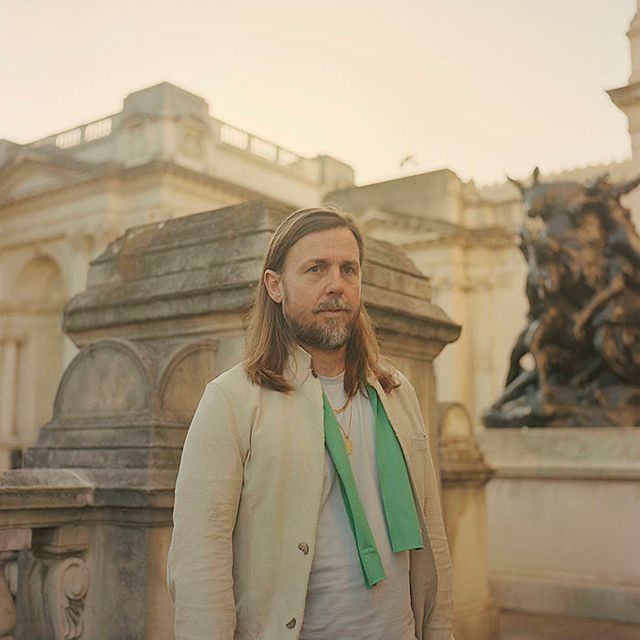
Mark Leckey was born in 1964 in Birkenhead, in the United Kingdom. Growing up in Ellesmere Port, on the outskirts of Liverpool, Leckey was keenly aware of his outsider status. He found acceptance as part of the “casual” subculture, which emerged from football hooliganism in the late-1970s United Kingdom, and demonstrated an early interest in the intersections between material culture, fashion, transformation, and identity. He received his BA from Newcastle Polytechnic in 1990. Leckey produces art that addresses the abundance of objects and images in contemporary culture. In his films, sculptures, and installations, the artist has at various times assumed the role of alchemist by transforming objects and images into new mediums. The found footage that Leckey spliced together in his 1999 film Fiorucci Made Me Hardcore, a portrayal of British dance culture, begins and ends with sequences of ethereal cloudscapes and includes a succession of scenes of dancing people, walking youths, and feet clad in Adidas Samba sneakers. Set to a soundtrack of trancelike music, racing cars, and sirens, these scenes both commemorate and reanimate the distinct 1980s British subculture of the casuals. In the film Leckey also references the casuals’ penchant for brand names by using a voiceover listing the names of high-end clothing designers such as the Italian brand Fiorucci. Leckey’s translational processes include 3-D scanning and printing, green screen technology, and CGI. The artist’s 2004 film Made in ’Eaven features a CGI simulation of Jeff Koons’s seminal 1986 sculpture Rabbit in the center of Leckey’s apartment. Indicating the artist’s desire to engage with objects on multiple levels, the simulation of Koons’s work exactly resembles the original; however, the absence of a camera’s reflection on the surface of the stainless steel sculpture indicates the simulation’s digital origins. Like many of Leckey’s other works, Made in ’Eaven reflects the artist’s preference for mediating his experience of real objects with digital technologies. In 2013 Leckey took on the role of curator and realized an exhibition he had proposed in his video Prop4aShw (2010–13). Combining contemporary artworks with archaeological artifacts and mechanical objects, Leckey sought to trace the connections that computing and other new technologies have to the material past and age-old beliefs. In the resulting exhibition, titled The Universal Addressability of Dumb Things, which traveled throughout Great Britain, Leckey assembled a surprising collection of objects that included a mummified Egyptian cat, a bionic hand juxtaposed with a medieval reliquary in the shape of a hand, and a carved mandrake root. From 2005 to 2009, Leckey was a professor of film studies at the Städelschule in Frankfurt am Main, Germany. He is currently a reader of fine arts at Goldsmiths, University of London. Solo exhibitions devoted to Leckey’s work have been hosted by Le Consortium, Dijon, France (2007–08); the Serpentine Gallery, London (2011); the Hammer Museum, University of California Los Angeles (2013); and WIELS Contemporary Art Centre, Brussels (2014). Leckey’s performance-based works have been presented by the Institute of Contemporary Arts, London (2009), and by the Museum of Modern Art at the Abrons Art Center, New York (2009). His work was featured in the Venice Biennale (2013) and the Carnegie International, Pittsburgh (2013). He was the recipient of the 2008 Turner Prize and a finalist for the 2016 Hugo Boss Prize. Leckey lives and works in London.
Track Mark Leckey
Get notifications when works come to auction, and access market analytics
Create Free AccountAlready have an account? Sign In
Professional documentation gives you clarity, portability, and confidence in your collection.
Learn why collectors document their holdings onlineYour collection, accessible anywhere
Access your collection from any device with our cloud-based platform. Native mobile apps provide seamless synchronization and offline browsing, ensuring your collection data is always at hand.