Biography
Rebecca Horn was born in 1944 in Michelstadt, Germany. As a young girl, Horn read Johann Valentin Andreae’s The Chymical Wedding of Christian Rosenkreutz (Die Chymische Hochzeit des Christian Rosenkreutz) and Raymond Roussel’s Locus Solus, which cultivated the artist’s interest in alchemy, Surrealist machines, and the absurd. Studying at the Hochschule für Bildende Künste in Hamburg from 1964 to 1970, Horn was inspired by the writings of Franz Kafka and Jean Genet, and the films of Luis Buñuel and Pier Paolo Pasolini. The most profound influence on Horn’s development as an artist, however, was a lung condition contracted in 1968 that forced her to stop using certain sculptural materials. A subsequent period of convalescence at a sanatorium inspired a series of sculptures concerned with the body, isolation, and vulnerability. Horn turned to soft materials, reminiscent of bandages and prostheses, and began making her body-extension sculptures. Living in Hamburg until 1971, Horn worked mainly as a Performance artist, incorporating her body sculptures into actions. After a short stay in London in 1971, she was invited to participate in Documenta 5 in Kassel the following year, where she staged her first large-scale public performance. That same year, she began incorporating feathers in her work and began making mechanical pieces. Horn moved to West Berlin in 1973 and had her first solo exhibition at the Galerie René Block. While there, she also made her first film, Berlin Exercises: Dreaming Under Water, which won the Deutscher Kritiker Preis in 1975. Horn made her first feature-length film in 1978, Der Eintänzer. In the 1980s Horn began working with site-specific installations. Collaborating with Jannis Kounellis in 1986 on an installation at the site of an insane asylum in Vienna, Horn became increasingly interested in the history and memory of environment. The artist was awarded the Arnold-Bode-Preis at Documenta 8 the following year. In the late 1980s, Horn returned to filmmaking. In 1990 she completed the full-length feature film Buster’s Bedroom, starring Donald Sutherland. Over the past two decades, while simultaneously experimenting with paint machines, poetry, postcard collage, and drawing, Horn has expanded the vocabulary of her installations to directly manipulate the specific effects of mirrors and light. In 1992 Horn became the first woman to receive the prestigious Trägerin des Kaiserrings Goslar, and was awarded the Medienkunstpreis Karlsruhe for achievements in technology and art. In 1993 the Solomon R. Guggenheim Museum, New York, organized a mid-career retrospective, which traveled to the Stedelijk Van Abbemuseum, Eindhoven; Nationalgalerie, Berlin; Kunsthalle Wien, Vienna; Tate Gallery and Serpentine Gallery, London; and Musée de Grenoble. She has since shown her work at the Venice Biennale (1997) and had solo exhibitions at the Irish Museum of Modern Art in Dublin (2001), Kunstsammlung Nordrhein-Westfalen in Düsseldorf (2004), and Martin Gropius-Bau in Berlin (2006), among other institutions. She also received the Grande médaille des arts plastiques from the Académie d'architecture de Paris (2011). Horn presently lives and works in Paris and Berlin.
Track Rebecca Horn
Get notifications when works come to auction, and access market analytics
Create Free AccountAlready have an account? Sign In
Professional documentation gives you clarity, portability, and confidence in your collection.
Learn why collectors document their holdings online


Your collection, accessible anywhere
Access your collection from any device with our cloud-based platform. Native mobile apps provide seamless synchronization and offline browsing, ensuring your collection data is always at hand.


Biography
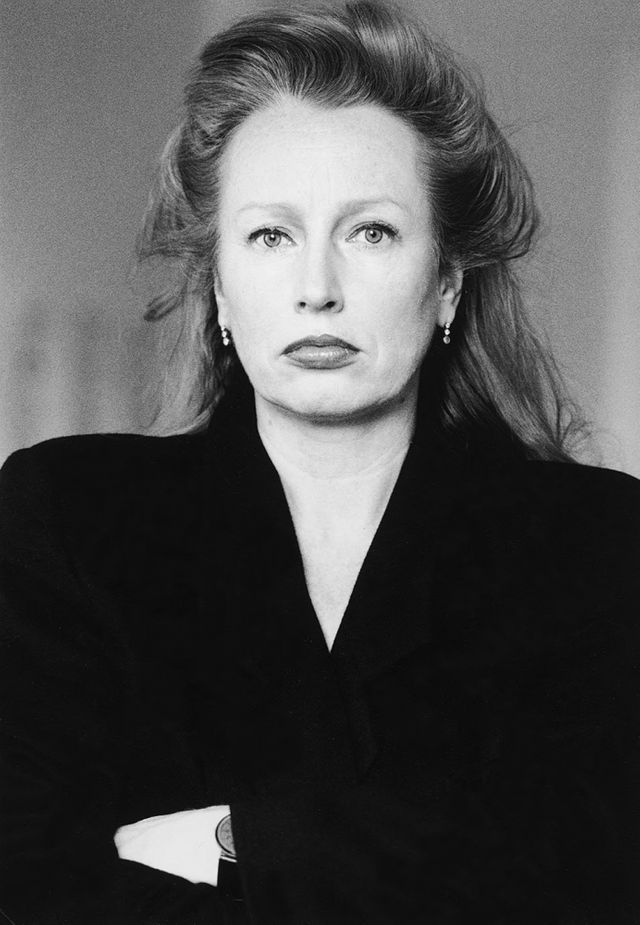
Rebecca Horn was born in 1944 in Michelstadt, Germany. As a young girl, Horn read Johann Valentin Andreae’s The Chymical Wedding of Christian Rosenkreutz (Die Chymische Hochzeit des Christian Rosenkreutz) and Raymond Roussel’s Locus Solus, which cultivated the artist’s interest in alchemy, Surrealist machines, and the absurd. Studying at the Hochschule für Bildende Künste in Hamburg from 1964 to 1970, Horn was inspired by the writings of Franz Kafka and Jean Genet, and the films of Luis Buñuel and Pier Paolo Pasolini. The most profound influence on Horn’s development as an artist, however, was a lung condition contracted in 1968 that forced her to stop using certain sculptural materials. A subsequent period of convalescence at a sanatorium inspired a series of sculptures concerned with the body, isolation, and vulnerability. Horn turned to soft materials, reminiscent of bandages and prostheses, and began making her body-extension sculptures. Living in Hamburg until 1971, Horn worked mainly as a Performance artist, incorporating her body sculptures into actions. After a short stay in London in 1971, she was invited to participate in Documenta 5 in Kassel the following year, where she staged her first large-scale public performance. That same year, she began incorporating feathers in her work and began making mechanical pieces. Horn moved to West Berlin in 1973 and had her first solo exhibition at the Galerie René Block. While there, she also made her first film, Berlin Exercises: Dreaming Under Water, which won the Deutscher Kritiker Preis in 1975. Horn made her first feature-length film in 1978, Der Eintänzer. In the 1980s Horn began working with site-specific installations. Collaborating with Jannis Kounellis in 1986 on an installation at the site of an insane asylum in Vienna, Horn became increasingly interested in the history and memory of environment. The artist was awarded the Arnold-Bode-Preis at Documenta 8 the following year. In the late 1980s, Horn returned to filmmaking. In 1990 she completed the full-length feature film Buster’s Bedroom, starring Donald Sutherland. Over the past two decades, while simultaneously experimenting with paint machines, poetry, postcard collage, and drawing, Horn has expanded the vocabulary of her installations to directly manipulate the specific effects of mirrors and light. In 1992 Horn became the first woman to receive the prestigious Trägerin des Kaiserrings Goslar, and was awarded the Medienkunstpreis Karlsruhe for achievements in technology and art. In 1993 the Solomon R. Guggenheim Museum, New York, organized a mid-career retrospective, which traveled to the Stedelijk Van Abbemuseum, Eindhoven; Nationalgalerie, Berlin; Kunsthalle Wien, Vienna; Tate Gallery and Serpentine Gallery, London; and Musée de Grenoble. She has since shown her work at the Venice Biennale (1997) and had solo exhibitions at the Irish Museum of Modern Art in Dublin (2001), Kunstsammlung Nordrhein-Westfalen in Düsseldorf (2004), and Martin Gropius-Bau in Berlin (2006), among other institutions. She also received the Grande médaille des arts plastiques from the Académie d'architecture de Paris (2011). Horn presently lives and works in Paris and Berlin.
Track Rebecca Horn
Get notifications when works come to auction, and access market analytics
Create Free AccountAlready have an account? Sign In
Professional documentation gives you clarity, portability, and confidence in your collection.
Learn why collectors document their holdings onlineYour collection, accessible anywhere
Access your collection from any device with our cloud-based platform. Native mobile apps provide seamless synchronization and offline browsing, ensuring your collection data is always at hand.