Biography
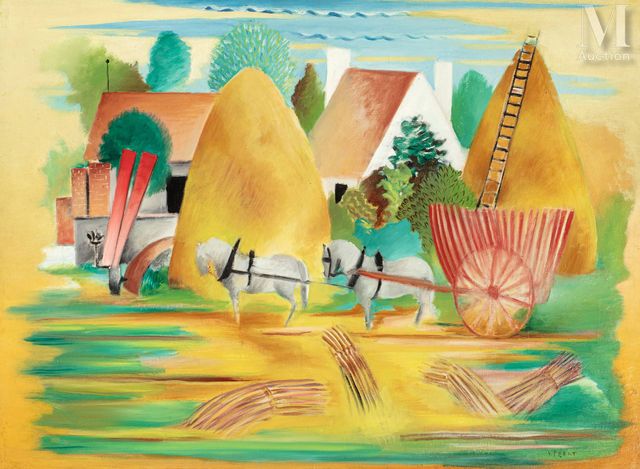
Serge Ferat (1881-1958) was a Russian Cubist Artist. He was the second son of the Moscow-born Russian count Jastrebzoff. In 1901, Serge came to Paris along with Helene d´Oettingen, who was purportedly his father´s mistress, and went to study at the Academie Julian. Serge painted under the name Alexander Rudniev and later under the name Serge Ferat. As of 1906, he held regular exhibitions at the Salon des Independants. In Paris he met Picasso and Apollinaire. Serge started painting cubistically, mainly on glass. Presumably, Picasso started to experiment on glass due to Serge. Picasso left parts of the glass unpainted, resulting in the background playing with the painting. Only “Violin and newspaper” has been preserved. After the First World War broke out, Serge Ferat started to work as a volunteer at the Hopital du Gouvernement Italien in Paris. When Picasso´s wife Eva was in this hospital in February 1915, Picasso stayed with Helene d´Oettingen and Ferat. Picasso could use their telephone and also learned Russian. During that time, Serge had a relationship with Irene Lagut, who he later lost to Picasso. Later, Apollinaire wrote about this period the novel “La femme assise”, which was not published until 1920. As a result of the Russian Revolution, the flow of income from Russia stopped. After selling works by Rousseau le Douanier, Serge started working mainly for theaters. Among others, Ferat designed the set for Les Mamelles de Tiresias, a surreal play by Apollinaire in 1918. Irene Lagut designed the costumes for this play. Serge Ferat exhibited his works with the cubists during Section d´Or in 1925. He died in Paris in 1958.
Track Serge Férat
Get notifications when works come to auction, and access market analytics
Create Free AccountAlready have an account? Sign In
Professional documentation gives you clarity, portability, and confidence in your collection.
Learn why collectors document their holdings online


Your collection, accessible anywhere
Access your collection from any device with our cloud-based platform. Native mobile apps provide seamless synchronization and offline browsing, ensuring your collection data is always at hand.


Biography
Serge Ferat (1881-1958) was a Russian Cubist Artist. He was the second son of the Moscow-born Russian count Jastrebzoff. In 1901, Serge came to Paris along with Helene d´Oettingen, who was purportedly his father´s mistress, and went to study at the Academie Julian. Serge painted under the name Alexander Rudniev and later under the name Serge Ferat. As of 1906, he held regular exhibitions at the Salon des Independants. In Paris he met Picasso and Apollinaire. Serge started painting cubistically, mainly on glass. Presumably, Picasso started to experiment on glass due to Serge. Picasso left parts of the glass unpainted, resulting in the background playing with the painting. Only “Violin and newspaper” has been preserved. After the First World War broke out, Serge Ferat started to work as a volunteer at the Hopital du Gouvernement Italien in Paris. When Picasso´s wife Eva was in this hospital in February 1915, Picasso stayed with Helene d´Oettingen and Ferat. Picasso could use their telephone and also learned Russian. During that time, Serge had a relationship with Irene Lagut, who he later lost to Picasso. Later, Apollinaire wrote about this period the novel “La femme assise”, which was not published until 1920. As a result of the Russian Revolution, the flow of income from Russia stopped. After selling works by Rousseau le Douanier, Serge started working mainly for theaters. Among others, Ferat designed the set for Les Mamelles de Tiresias, a surreal play by Apollinaire in 1918. Irene Lagut designed the costumes for this play. Serge Ferat exhibited his works with the cubists during Section d´Or in 1925. He died in Paris in 1958.
Track Serge Férat
Get notifications when works come to auction, and access market analytics
Create Free AccountAlready have an account? Sign In
Professional documentation gives you clarity, portability, and confidence in your collection.
Learn why collectors document their holdings onlineYour collection, accessible anywhere
Access your collection from any device with our cloud-based platform. Native mobile apps provide seamless synchronization and offline browsing, ensuring your collection data is always at hand.