Biography
Theodore Roszak was born on May 1, 1907, in Poznań, Germany (now Poland), and in 1909 his family immigrated to the United States, settling in Chicago. Roszak began his career as a draftsman and lithographer before turning to figurative painting. Also an accomplished violinist, he enjoyed incorporating musical references into his artwork. Roszak studied at the School of the Art Institute of Chicago (1922–28), initially part-time as a teenager and then full-time after graduating from high school. He moved to New York briefly in 1926 and enrolled in classes at the National Academy of Design under George Luks and studied philosophy at Columbia University. After resuming his studies in Chicago, Roszak became an instructor at the Art Institute. The Allerton Galleries, Chicago, organized his first solo exhibition in 1928. An 18-month fellowship in Europe from 1929 to 1930, where he painted out of a Prague studio and visited Paris as well as cities in Austria, Germany, and Italy, expanded Roszak’s exposure to contemporary art and marked a turning point for his career. He became interested in Constructivism and Surrealism and was especially intrigued by the work of Giorgio de Chirico, which helped Roszak bridge his own romantic realism and contemporary abstract styles. Roszak returned to the United States, and by this time his artistic practice had shifted from painting to sculpture, with initial experiments in clay and plaster. He settled in New York, participating in the first Whitney Annual (later the Whitney Biennial) in 1932, and many thereafter. In addition to working on both freestanding and relief sculpture, during the Great Depression the artist found employment through the Works Progress Administration Federal Art Project. Roszak further strengthened his ties with Constructivism and industrial aesthetics when he was a faculty member of the Design Laboratory (later the Laboratory School of Industrial Design), New York, between 1938 and 1940. This school had been established in 1935 under László Moholy-Nagy’s leadership, among that of others, in an attempt to bring Bauhaus principles to the United States. From about 1936 to 1943, Roszak investigated structure and form in a series of geometric wood and plastic constructions. He also taught design and sculpture at Sarah Lawrence College, Bronxville, New York, from 1941 to 1955. During World War II, Roszak designed aircraft and taught aircraft mechanics at the Brewster Aeronautical Corporation, Newark, New Jersey, and worked as a navigational and engineering draftsman at the Stevens Institute of Technology, Hoboken, New Jersey. His work from this period examines such themes as death and destruction, ritualistic violence, and rites of passage. Around 1946, however, Roszak returned to freer, more expressionistic and organic sculptural forms. He established himself as a pioneer welder-sculptor, alongside such artists as Seymour Lipton and David Smith, and explored textural variations as well as unconventional materials. Spiky steel forms replaced his earlier slick, machine-tooled precision. In 1951 Roszak received the first of several solo exhibitions at the Pierre Matisse Gallery, New York. A retrospective, organized by the Walker Art Center, Minneapolis, and the Whitney Museum of American Art, New York, toured the United States (1956–57). He also participated in Documenta, Kassel, West Germany (1959), and the Venice Biennale (1960). Roszak received various commissions, including the spire and bell tower for Eero Saarinen’s chapel at the Massachusetts Institute of Technology, Cambridge (1955–56); the eagle on the facade of the U.S. Embassy, London (1955–60); and the Public Health Laboratory Building, New York, where he installed a major sculpture, Sentinel (1968). He also served on several boards in the 1960s and 1970s, such as the Advisory Committee on Cultural Presentations Program, State Department, Washington, D.C. (1962–66), and the Fine Arts Commission, New York (1969–75). Roszak died on September 3, 1981, in New York.
Track Theodore Roszak
Get notifications when works come to auction, and access market analytics
Create Free AccountAlready have an account? Sign In
Professional documentation gives you clarity, portability, and confidence in your collection.
Learn why collectors document their holdings online


Your collection, accessible anywhere
Access your collection from any device with our cloud-based platform. Native mobile apps provide seamless synchronization and offline browsing, ensuring your collection data is always at hand.


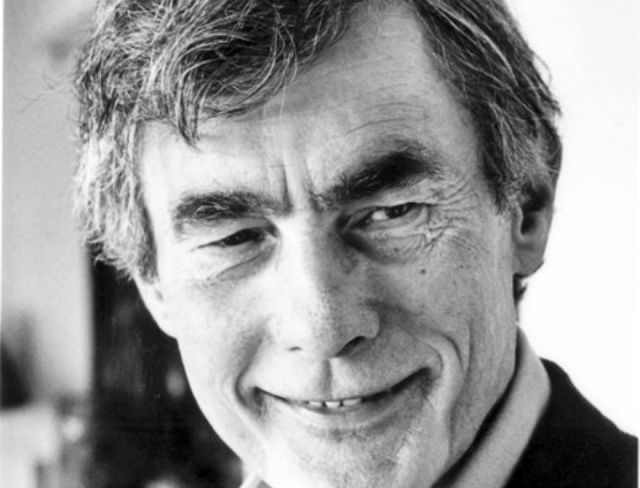
Biography
Theodore Roszak was born on May 1, 1907, in Poznań, Germany (now Poland), and in 1909 his family immigrated to the United States, settling in Chicago. Roszak began his career as a draftsman and lithographer before turning to figurative painting. Also an accomplished violinist, he enjoyed incorporating musical references into his artwork. Roszak studied at the School of the Art Institute of Chicago (1922–28), initially part-time as a teenager and then full-time after graduating from high school. He moved to New York briefly in 1926 and enrolled in classes at the National Academy of Design under George Luks and studied philosophy at Columbia University. After resuming his studies in Chicago, Roszak became an instructor at the Art Institute. The Allerton Galleries, Chicago, organized his first solo exhibition in 1928. An 18-month fellowship in Europe from 1929 to 1930, where he painted out of a Prague studio and visited Paris as well as cities in Austria, Germany, and Italy, expanded Roszak’s exposure to contemporary art and marked a turning point for his career. He became interested in Constructivism and Surrealism and was especially intrigued by the work of Giorgio de Chirico, which helped Roszak bridge his own romantic realism and contemporary abstract styles. Roszak returned to the United States, and by this time his artistic practice had shifted from painting to sculpture, with initial experiments in clay and plaster. He settled in New York, participating in the first Whitney Annual (later the Whitney Biennial) in 1932, and many thereafter. In addition to working on both freestanding and relief sculpture, during the Great Depression the artist found employment through the Works Progress Administration Federal Art Project. Roszak further strengthened his ties with Constructivism and industrial aesthetics when he was a faculty member of the Design Laboratory (later the Laboratory School of Industrial Design), New York, between 1938 and 1940. This school had been established in 1935 under László Moholy-Nagy’s leadership, among that of others, in an attempt to bring Bauhaus principles to the United States. From about 1936 to 1943, Roszak investigated structure and form in a series of geometric wood and plastic constructions. He also taught design and sculpture at Sarah Lawrence College, Bronxville, New York, from 1941 to 1955. During World War II, Roszak designed aircraft and taught aircraft mechanics at the Brewster Aeronautical Corporation, Newark, New Jersey, and worked as a navigational and engineering draftsman at the Stevens Institute of Technology, Hoboken, New Jersey. His work from this period examines such themes as death and destruction, ritualistic violence, and rites of passage. Around 1946, however, Roszak returned to freer, more expressionistic and organic sculptural forms. He established himself as a pioneer welder-sculptor, alongside such artists as Seymour Lipton and David Smith, and explored textural variations as well as unconventional materials. Spiky steel forms replaced his earlier slick, machine-tooled precision. In 1951 Roszak received the first of several solo exhibitions at the Pierre Matisse Gallery, New York. A retrospective, organized by the Walker Art Center, Minneapolis, and the Whitney Museum of American Art, New York, toured the United States (1956–57). He also participated in Documenta, Kassel, West Germany (1959), and the Venice Biennale (1960). Roszak received various commissions, including the spire and bell tower for Eero Saarinen’s chapel at the Massachusetts Institute of Technology, Cambridge (1955–56); the eagle on the facade of the U.S. Embassy, London (1955–60); and the Public Health Laboratory Building, New York, where he installed a major sculpture, Sentinel (1968). He also served on several boards in the 1960s and 1970s, such as the Advisory Committee on Cultural Presentations Program, State Department, Washington, D.C. (1962–66), and the Fine Arts Commission, New York (1969–75). Roszak died on September 3, 1981, in New York.
Track Theodore Roszak
Get notifications when works come to auction, and access market analytics
Create Free AccountAlready have an account? Sign In
Professional documentation gives you clarity, portability, and confidence in your collection.
Learn why collectors document their holdings onlineYour collection, accessible anywhere
Access your collection from any device with our cloud-based platform. Native mobile apps provide seamless synchronization and offline browsing, ensuring your collection data is always at hand.