Biography
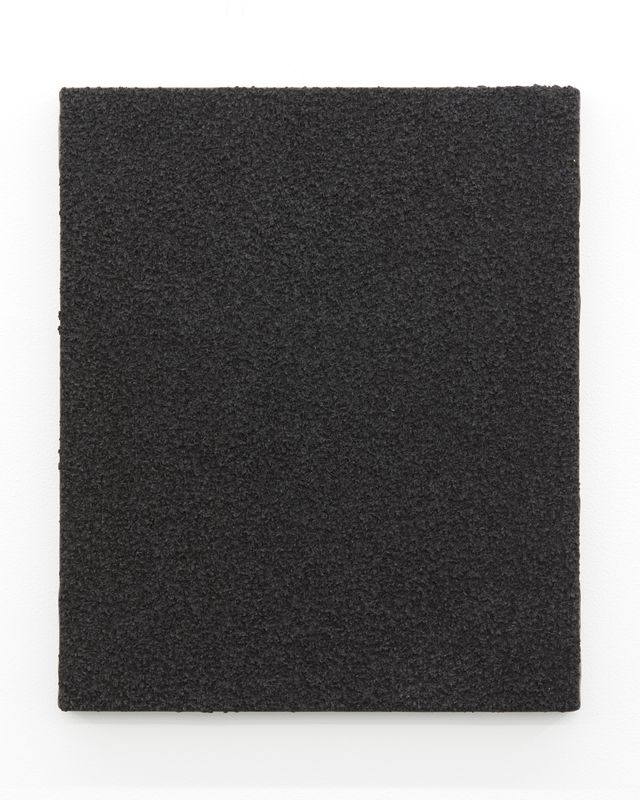
Murakami, who had used the backyard and exhibition rooms of the Tokyo National Museum as his playground as a child in the immediate postwar period, was drawn to Tohaku Hasegawa’s works and entered the Japanese Painting Course at the Tokyo National University of Fine Arts to study ink painting. He was, however, unable to adapt to the then new method in Japanese painting of using mineral pigments. As a result, he increasingly devoted himself to making abstract expressionistic pictures made solely in black paint made of a mixture of Japanese pigments and oil paints. The decisive moment of this transformation occurred when he was invited to participate in and witnessed the enormous scale and solidity of the American abstract expressionist paintings included in the Guggenheim International Award Exhibition held in New York in 1964. Shocked by these works, Murakami abandoned Japanese painting techniques and began employing a new method in which he painted the canvas with a black undercoat and layered more black paint on top of it to gradually build a thick surface. After this shift, he concentrated on completing black paintings that satisfied his ideal. Many of Murakami’s paintings are covered all over with a color palette primarily constituted by jet blacks and reds. His works on canvas are made by mixing charcoal powder into the paint to absorb the oil and using a knife to work the paint onto the support. On the other hand, his works on paper are made with a combination of acrylic and oil paints, which are normally thought to be incompatible. He applies the acrylic paint with a pencil and oil paint with a knife to create finely distinguished layers of paint that give depth to the picture plane. Murakami produces both canvas and paper works over a long period, sometimes taking years to create a single work. Since converting to Catholicism in 1979, Murakami has fashioned his life after that lead in a monastery, waking up late at night, painting till dawn, and going to a church in the morning to pray, and working between meals and a nap until he sleeps. These labor intensive works made over long durations of time are drastically different from modern art based on self-expression. They are instead products of a self-less acts akin to prayer that approach “eternity” and “unselfconsciousness.” These works are marked with a process in which man devotes his life to the attainment of a sublime spirit. Morning, noon, night, and despondence: these things that definitely exist cannot be captured with one’s perceptions. Is it possible to fix such existences on a two-dimensional canvas? It might be that when I dispose of unnecessary intentions, and can just simply be “natural,” then it is possible for me to manifest “the profound” that encompasses everything. I hope to touch that “profundity” over a long passage of time, and through my daily act of applying paint to my paintings.
Track Tomoharu Murakami
Get notifications when works come to auction, and access market analytics
Create Free AccountAlready have an account? Sign In
Professional documentation gives you clarity, portability, and confidence in your collection.
Learn why collectors document their holdings online


Your collection, accessible anywhere
Access your collection from any device with our cloud-based platform. Native mobile apps provide seamless synchronization and offline browsing, ensuring your collection data is always at hand.


Biography
Murakami, who had used the backyard and exhibition rooms of the Tokyo National Museum as his playground as a child in the immediate postwar period, was drawn to Tohaku Hasegawa’s works and entered the Japanese Painting Course at the Tokyo National University of Fine Arts to study ink painting. He was, however, unable to adapt to the then new method in Japanese painting of using mineral pigments. As a result, he increasingly devoted himself to making abstract expressionistic pictures made solely in black paint made of a mixture of Japanese pigments and oil paints. The decisive moment of this transformation occurred when he was invited to participate in and witnessed the enormous scale and solidity of the American abstract expressionist paintings included in the Guggenheim International Award Exhibition held in New York in 1964. Shocked by these works, Murakami abandoned Japanese painting techniques and began employing a new method in which he painted the canvas with a black undercoat and layered more black paint on top of it to gradually build a thick surface. After this shift, he concentrated on completing black paintings that satisfied his ideal. Many of Murakami’s paintings are covered all over with a color palette primarily constituted by jet blacks and reds. His works on canvas are made by mixing charcoal powder into the paint to absorb the oil and using a knife to work the paint onto the support. On the other hand, his works on paper are made with a combination of acrylic and oil paints, which are normally thought to be incompatible. He applies the acrylic paint with a pencil and oil paint with a knife to create finely distinguished layers of paint that give depth to the picture plane. Murakami produces both canvas and paper works over a long period, sometimes taking years to create a single work. Since converting to Catholicism in 1979, Murakami has fashioned his life after that lead in a monastery, waking up late at night, painting till dawn, and going to a church in the morning to pray, and working between meals and a nap until he sleeps. These labor intensive works made over long durations of time are drastically different from modern art based on self-expression. They are instead products of a self-less acts akin to prayer that approach “eternity” and “unselfconsciousness.” These works are marked with a process in which man devotes his life to the attainment of a sublime spirit. Morning, noon, night, and despondence: these things that definitely exist cannot be captured with one’s perceptions. Is it possible to fix such existences on a two-dimensional canvas? It might be that when I dispose of unnecessary intentions, and can just simply be “natural,” then it is possible for me to manifest “the profound” that encompasses everything. I hope to touch that “profundity” over a long passage of time, and through my daily act of applying paint to my paintings.
Track Tomoharu Murakami
Get notifications when works come to auction, and access market analytics
Create Free AccountAlready have an account? Sign In
Professional documentation gives you clarity, portability, and confidence in your collection.
Learn why collectors document their holdings onlineYour collection, accessible anywhere
Access your collection from any device with our cloud-based platform. Native mobile apps provide seamless synchronization and offline browsing, ensuring your collection data is always at hand.