
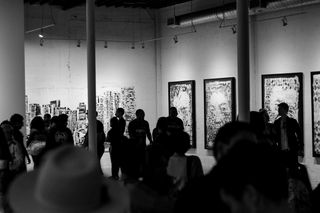
When The Armory Show's VIP doors opened at the Javits Center on Thursday, September 24th, the art world had been holding its breath. Gallery openings in Tribeca and Chelsea had generated genuine buzz in the weeks prior, but buzz at previews and wire transfers for six-figure works are different currencies. By the time the fair wrapped its 32nd edition on Sunday, September 27th, the receipts were in — and they were, by the cautious standards of this market cycle, genuinely impressive.
The Numbers That Matter
The Armory Show concluded its 32nd edition in New York on September 27, 2026, after four days at the Javits Center, welcoming 50,000 visitors and reporting major sales across a wide range of price points. That visitor count alone signals a market with oxygen in it. More telling, however, are the individual transactions.
While many booths at this year's fair leaned into single-artist narratives, New York's Michael Rosenfeld Gallery went the opposite direction, filling its booth with 112 works spanning more than three decades of American art history — ranging across works by Lee Krasner, Jackson Pollock, Yayoi Kusama, Romare Bearden, Alice Neel, Louise Nevelson, Alma Thomas, and Jack Whitten, among dozens of others. A Joan Mitchell painting from the presentation sold for more than $2 million, the most expensive sale reported at the fair from its VIP day. The gallery also placed a bronze by Richmond Barthé and a collage by Louise Nevelson, each in the range of $100,000–$250,000, and two works by Benny Andrews at $50,000–$100,000 each.
Rosenfeld wasn't alone in posting meaningful numbers. Hollis Taggart sold Jackson Pollock's Untitled from 1951 in the range of $3 million to $3.5 million, and Jean-Michel Basquiat's Untitled (Figure Holding Up Fish) from 1981 for between $1.4 million and $1.6 million. At the mid-market level, Galerie Maximillian sold Rashid Johnson's Untitled (Large Mosaic) (2025) for $175,000 in the first hour of the fair, along with Jonas Wood's Five Bonsais (2024) for $125,000. Mennour nearly sold out its booth, placing seven paintings by Dhewadi Hadjab for $110,000 each.
For collectors, the Hadjab detail is instructive: a younger, less-established name moving seven works at $110,000 apiece in a single fair indicates appetite beyond blue-chip safety, at least at certain price points.
A Fair With a Mandate — and a Director Delivering It
Under fair director Kyla McMillan, this year's edition grew to 242 exhibitors from more than 30 countries, with expanded Presents and Solo sections dedicated to emerging galleries and solo artist presentations. The 2026 edition placed particular focus on the Caribbean, with expanded institutional participation and new acquisition prizes.
The 2026 edition landed later on the calendar than usual, pushed from its traditional early September slot to later in the month, running through Sunday, September 27th. That scheduling shift — which aligned the fair's close with Armory Week's peak — appears to have concentrated buying energy rather than diffusing it. Reported sales reached some of the highest levels seen at the fair in recent years.
Despite continued challenges and uncertainty in the art market, the vibe was decidedly upbeat, attendance was solid if not frenzied, and reports of sales — from five to seven figures — began streaming in early on the VIP preview day. The collector profile at the fair reflected the moment: notable attendees included collectors Beth DeWoody, Pamela Joyner, and Jason and Michelle Rubell — serious, institutional-grade buyers, not first-timers testing the water.
The Mood Beneath the Sales
The Armory's results should be understood within the wider sentiment that has shaped New York's fall opening. The energy on the streets in Tribeca and Chelsea was high in the weeks prior, with crowds streaming in and out of galleries as they opened their big fall shows — dealers offering their best, timed to be on view when the art world converged on New York for the Armory Show. The question on everyone's mind was whether the excitement in the air would translate to sales.
The answer, at least for this one fair, is a qualified yes. But the qualifier matters. New York adviser Aileen Agopian put it plainly to ARTnews:
"Collectors are energized. But they're disciplined."That sentence is the most precise description of this market's current register. The buyers are present, the money is available, but the selectivity is real. Works with institutional pedigree, strong provenance, and clear narratives moved. Works without those attributes did not.
Separately, TEFAF secured a new, five-year agreement to hold its New York fair at the Park Avenue Armory through 2031 — a confidence signal from one of the market's most rigorous platforms that New York's position as a commercial center is not under threat. And further out on the calendar, twelve works from the collection of the late oil tycoon Armand Hammer will go under the hammer at Sotheby's New York this November, including Impressionist masterpieces by Mary Cassatt, Edgar Degas, Camille Pissarro, and Pierre-Auguste Renoir, estimated to fetch $25 million–$37 million in total. The November auctions will be the real stress-test.
The Shadow on the Boom: South Asian Art's Forgery Crisis
While New York absorbed the market's attention this week, a more structurally significant story has been building in Mumbai and London. In both cities, paintings by Maqbool Fida Husain and Sayed Haider Raza have never been so expensive. The scale of the run-up is remarkable: the combined auction turnover of Husain, S. H. Raza, and F. N. Souza exceeded $40 million during 2025 alone. In April 2026, Raja Ravi Varma's celebrated Yashoda and Krishna achieved approximately $17.9 million, establishing a new all-time record for any South Asian painting sold at auction.
That scale of price appreciation is a magnet for forgeries, and by multiple accounts, the magnet is working. The booming market for South Asian art has been flooded with forgeries, with auction sales for South Asian art exceeding $100 million in 2025 alone; both major names and middle-market artists are finding their work targeted by forgers. Dadiba Pundole, whose Mumbai gallery represented several leading Indian modernists during their lifetimes, estimates that as many as one in 10 modern artworks sold privately in India could be fake.
Charles Moore, of London's Grosvenor Gallery, told the Financial Times he is offered a fake artwork by private sellers "every couple of weeks," and estimates that these forgeries are priced to attract buyers in search of a relative bargain, with valuations anchored to auction records. The sophistication of the fakes has tracked the money. The fakes themselves have improved: early examples were often crude, produced cheaply by struggling artists working for unscrupulous dealers. Today, some are convincing enough to fool experts, helped along by a market where documentation is scarce and comprehensive catalogs and archives are rare.
The case of Ganesh Pyne illustrates the dynamic precisely. Pyne's painting The Fisherman (1979) sold at auction for $5.22 million in June — a record for the artist and well over its estimate of $340,000 to $476,000. But Pyne's work has long been the subject of copies: in 2006, Christie's withdrew a tempera painting from auction after it was revealed to have been passed off as an authentic Pyne.
Perhaps most alarming for the long-term health of the category: once, the obvious targets were the biggest names; now, prices have risen enough that "it pays to forge the middle-market artists too." The celebrated Pakistani modernist Sadequain, whose paintings have fetched six figures, provides a cautionary example: specialists report that an influx of forgeries has already cooled his market.
What Collectors Should Do Now
The Armory Show's results and the South Asian forgeries crisis are not unrelated phenomena — they are two faces of the same underlying dynamic. Capital is flowing into art with genuine conviction, and where conviction concentrates, so does opportunism. The discipline that characterizes today's serious collector must now extend to due diligence that matches the sophistication of the threat.
For collectors active in South Asian modernism, several immediate steps apply:
- Commission independent authentication before any private purchase. Dadiba Pundole notes that a lack of scholarship has led to a reliance on word of mouth, and that a scarcity of art history programs and public collections results in limited exposure to authentic work — meaning the burden of verification falls on the buyer, not the market.
- Prioritize auction-house provenance over private-sale provenance. Provenance and authentication face greater scrutiny just as Indian art is attracting more money and first-time buyers — auction houses, with reputational stakes, apply more rigorous vetting than private intermediaries.
- Treat mid-market bargains with particular skepticism. Forgeries are priced to attract buyers in search of a relative bargain, which means anything priced conspicuously below recent auction records deserves heightened scrutiny, not enthusiasm.
For collectors at fairs like the Armory, the lesson from this week is simpler: the market rewards specificity. The Joan Mitchell, the Pollock, the Basquiat — these are works with dense institutional histories, established auction records, and controlled supply. The 2026 edition of the Armory Show closed with strong commercial results, broader museum participation, and a program that placed artistic exchange across the Americas firmly within the fair's direction. That institutional dimension — works purchased by museums, placed with serious private collections — is the signal to track as the November auctions approach. The fall season has opened credibly. Whether it closes that way will depend on what Sotheby's, Christie's, and Phillips put on the block in six weeks, and how committed buyers prove to be when the room is quiet and the estimate sheets are staring back at them.