Biography
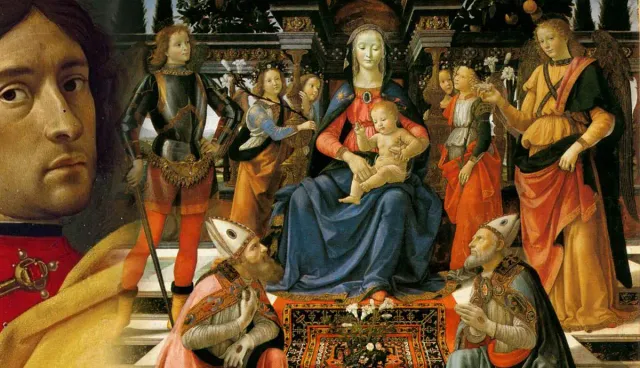
Born in 1449, Domenico di Tommaso Bigordi was called Ghirlandaio because his goldsmith father specialized in creating gold and silver garlands (ghirlande). Though presumably trained in his father's profession, Ghirlandaio worked under Alesso Baldovinetti, according to Vasari.[1] And he may also have assisted Andrea del Verrocchio, as his early panel paintings and frescoes clearly betray that master's influence. In temperament and approach, however, Ghirlandaio differed from both of his putative painting teachers. "Pronto, presto, e facile," as Vasari described him, Ghirlandaio simplified their painstakingly realistic styles into one more suitable for fresco. The artist was, in fact, primarily active in that medium, creating extensive fresco cycles in Rome (Sistine Chapel, 1481-1482) and elsewhere. His most notable Florentine cycles are in the Sassetti chapel in Santa Trinità (1483-1485) and in the choir, patronized by the Tornabuoni family, in Santa Maria Novella (1486-1490). To complete such vast undertakings Ghirlandaio employed a highly organized workshop, which included not only his brothers Davide and Benedetto but also his brother-in-law Sebastiano Mainardi, and even the young Michelangelo. Taken together, Ghirlandaio's frescoes, with their numerous portraits of members of the leading aristocratic families, provide a unique panorama of contemporary Florentine life. The artist died in 1494, leaving a son, Ridolfo, also a painter.
Track Domenico Ghirlandaio
Get notifications when works come to auction, and access market analytics
Create Free AccountAlready have an account? Sign In
Professional documentation gives you clarity, portability, and confidence in your collection.
Learn why collectors document their holdings online


Your collection, accessible anywhere
Access your collection from any device with our cloud-based platform. Native mobile apps provide seamless synchronization and offline browsing, ensuring your collection data is always at hand.


Biography
Born in 1449, Domenico di Tommaso Bigordi was called Ghirlandaio because his goldsmith father specialized in creating gold and silver garlands (ghirlande). Though presumably trained in his father's profession, Ghirlandaio worked under Alesso Baldovinetti, according to Vasari.[1] And he may also have assisted Andrea del Verrocchio, as his early panel paintings and frescoes clearly betray that master's influence. In temperament and approach, however, Ghirlandaio differed from both of his putative painting teachers. "Pronto, presto, e facile," as Vasari described him, Ghirlandaio simplified their painstakingly realistic styles into one more suitable for fresco. The artist was, in fact, primarily active in that medium, creating extensive fresco cycles in Rome (Sistine Chapel, 1481-1482) and elsewhere. His most notable Florentine cycles are in the Sassetti chapel in Santa Trinità (1483-1485) and in the choir, patronized by the Tornabuoni family, in Santa Maria Novella (1486-1490). To complete such vast undertakings Ghirlandaio employed a highly organized workshop, which included not only his brothers Davide and Benedetto but also his brother-in-law Sebastiano Mainardi, and even the young Michelangelo. Taken together, Ghirlandaio's frescoes, with their numerous portraits of members of the leading aristocratic families, provide a unique panorama of contemporary Florentine life. The artist died in 1494, leaving a son, Ridolfo, also a painter.
Track Domenico Ghirlandaio
Get notifications when works come to auction, and access market analytics
Create Free AccountAlready have an account? Sign In
Professional documentation gives you clarity, portability, and confidence in your collection.
Learn why collectors document their holdings onlineYour collection, accessible anywhere
Access your collection from any device with our cloud-based platform. Native mobile apps provide seamless synchronization and offline browsing, ensuring your collection data is always at hand.