Biography
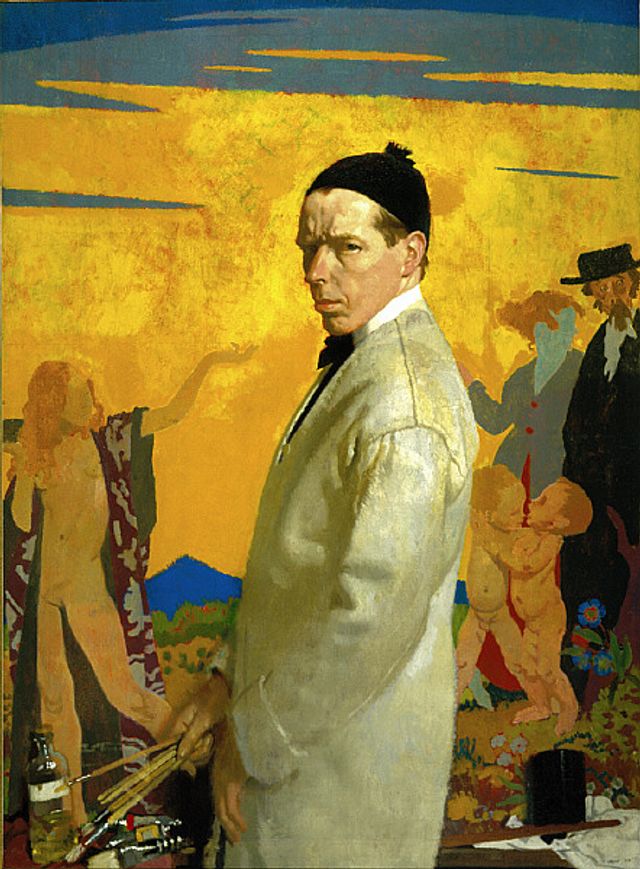
Sir William Orpen was born in Dublin in 1878. Although he has became a neglected figure in art history, between 1910 and 1930 he was considered one of Europe's most renowned portrait painters. He was accepted into the Metropolitan School of Art in Dublin at age 13, and at the age of 18, entered London's Slade School where he studied under Henry Tonks. Orpen's friends at Slade included the painter Augustus John. In 1901 Orpen married Grace Newstub, who's portrait he painted in 1907. They had three daughters, although the marriage was unhappy. Orpen returned to teach at the Metropolitan School of Art during the years between 1902 and 1914. He was made an Associate of the prestigious Royal Academy in 1910. Orpen's teaching tenure at the Metropolitan School of Art was interrupted by the outbreak of World War One. In 1916, he received a commission in the Army Service Corps. to serve as a war artist, and in 1917, he was sent to the Western Front. It was during the war that Orpen contracted several of the illnesses that were to later affect his health, including blood poisoning and Influenza. Orpen was knighted in 1918. After the war, Orpen caused some degree of critical and public controversy with his painting To the Unknown British Soldier (1919). Although he had been commissioned to paint portraits of the politicians at the Versailles Peace Conference, his anger at these same politicians--for what he felt to be their betrayal of the average solider--led him to paint this politically contentious work instead. However, Orpen did complete his commission The Signing of Peace in the Hall of Mirrors, Versailles, 28th June which now hangs in the Imperial War Museum in the U.K (see IWM ART catalogue number 2856, Imperial War Museum). For an account of the two versions of To the Unknown British Soldier see: http://www.firstworldwar.com/bio/orpen.htm Orpen's artistic output was substantial: his works are part of collections in both North America and the UK. For a list of the many Orpen paintings and drawings available online, see the Links page. Many of Orpen's portrait subjects, friends, acquaintances and military associates were key figures in early Modernist politics, art and literature. For a guide to their portraits, works and biographies, see the Links page. His published writings include: An Onlooker in France (1921) and Stories of Old Ireland and Myself (1924). William Orpen died in 1931 at the age of 53, the result of continuing poor health and alcoholism.
Track William Orpen
Get notifications when works come to auction, and access market analytics
Create Free AccountAlready have an account? Sign In
Professional documentation gives you clarity, portability, and confidence in your collection.
Learn why collectors document their holdings online


Your collection, accessible anywhere
Access your collection from any device with our cloud-based platform. Native mobile apps provide seamless synchronization and offline browsing, ensuring your collection data is always at hand.


Biography
Sir William Orpen was born in Dublin in 1878. Although he has became a neglected figure in art history, between 1910 and 1930 he was considered one of Europe's most renowned portrait painters. He was accepted into the Metropolitan School of Art in Dublin at age 13, and at the age of 18, entered London's Slade School where he studied under Henry Tonks. Orpen's friends at Slade included the painter Augustus John. In 1901 Orpen married Grace Newstub, who's portrait he painted in 1907. They had three daughters, although the marriage was unhappy. Orpen returned to teach at the Metropolitan School of Art during the years between 1902 and 1914. He was made an Associate of the prestigious Royal Academy in 1910. Orpen's teaching tenure at the Metropolitan School of Art was interrupted by the outbreak of World War One. In 1916, he received a commission in the Army Service Corps. to serve as a war artist, and in 1917, he was sent to the Western Front. It was during the war that Orpen contracted several of the illnesses that were to later affect his health, including blood poisoning and Influenza. Orpen was knighted in 1918. After the war, Orpen caused some degree of critical and public controversy with his painting To the Unknown British Soldier (1919). Although he had been commissioned to paint portraits of the politicians at the Versailles Peace Conference, his anger at these same politicians--for what he felt to be their betrayal of the average solider--led him to paint this politically contentious work instead. However, Orpen did complete his commission The Signing of Peace in the Hall of Mirrors, Versailles, 28th June which now hangs in the Imperial War Museum in the U.K (see IWM ART catalogue number 2856, Imperial War Museum). For an account of the two versions of To the Unknown British Soldier see: http://www.firstworldwar.com/bio/orpen.htm Orpen's artistic output was substantial: his works are part of collections in both North America and the UK. For a list of the many Orpen paintings and drawings available online, see the Links page. Many of Orpen's portrait subjects, friends, acquaintances and military associates were key figures in early Modernist politics, art and literature. For a guide to their portraits, works and biographies, see the Links page. His published writings include: An Onlooker in France (1921) and Stories of Old Ireland and Myself (1924). William Orpen died in 1931 at the age of 53, the result of continuing poor health and alcoholism.
Track William Orpen
Get notifications when works come to auction, and access market analytics
Create Free AccountAlready have an account? Sign In
Professional documentation gives you clarity, portability, and confidence in your collection.
Learn why collectors document their holdings onlineYour collection, accessible anywhere
Access your collection from any device with our cloud-based platform. Native mobile apps provide seamless synchronization and offline browsing, ensuring your collection data is always at hand.